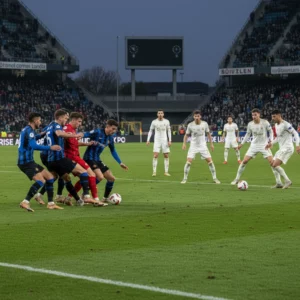

How off-the-ball movement changes the odds before kickoff
You often focus on goalscorers and stats that show up on the scoresheet, but matches are shaped by players you rarely notice when watching highlights. Off-the-ball movement—runs, positioning, pressing triggers and spatial occupation—alters how a team creates chances and defends. As a bettor, you can use knowledge about these behaviors to adjust your perceived probabilities and spot value.
Before the match, you should assess more than starting lineups. Consider how managers ask certain players to operate without the ball: will wingers invert to create overloads, will a false nine drop into midfield to drag center-backs out wide, or will full-backs stay high to stretch the opposition? These tactical decisions influence expected goals (xG) models and live match dynamics in ways that odds providers may underweight.
Practical off-the-ball roles that shift match probability
Identify the specific off-the-ball roles that consistently change how a game plays out. When you can recognize these roles in pre-match analysis and early minutes, you gain an edge for value betting.
-
Decoy runs that free up dangerous spaces
When a striker or winger makes intentional runs away from the ball, they create gaps for teammates. You should look for teams with forwards who habitually drop or drag defenders wide—these patterns increase the chance of successful through balls or cutbacks. If odds ignore a clear mismatch in defenders’ ability to handle those runs, the market may offer value on expected more open-play chances or on totals.
-
Occupying channels to control tempo and pass routes
Players who consistently occupy half-spaces and wide channels affect passing lanes and build-up rhythm. Midfielders who move into half-spaces can turn low-value possession into high-quality chances. Watch for teams whose structure forces opponents into predictable passes—this raises the probability of interceptions or counterattacks, useful when considering cash-out decisions or live bets on momentum shifts.
-
Pre-planned pressing triggers and coordinated counters
Pressing is a collective off-the-ball role: one player’s trigger often cues teammates. If a squad has a reliable trigger (e.g., opposition goalkeeper long passes), they will win possession higher up more often. Odds for early goals or first-half scoring may be mispriced if you’ve seen consistent pressing success in recent matches.
-
Set-piece positioning and space creation
Off-the-ball roles are especially visible at set pieces—who blocks, who drifts, and who seeks second balls matters. Teams with well-drilled off-the-ball routines will generate above-average set-piece xG. This can justify backing corners or set-piece goal markets when the public ignores tactical nuance.
By learning to spot these behaviors in scouting reports, heat maps and early match footage, you can anticipate how a game will open up and where bookmakers might mis-price probabilities. In the next section, you’ll learn how to quantify off-the-ball behavior with specific data sources and in-play signals so you can convert tactical observation into measurable value bets.

Quantifying off-the-ball behavior: data sources and metrics that matter
To convert observation into repeatable edge, pair video scouting with objective metrics. Not all data capture off-the-ball nuance, so focus on event and tracking providers that expose movement, pressure and involvement beyond touches. Useful public and commercial sources include StatsBomb/FBref (SCA/GCA, passes into final third), Opta (pressures, interceptions), Second Spectrum/Tracab (tracking-level runs, space occupation) and Understat (xG and shot locations).
Key metrics to watch:
- Shot- and chance-creation: Shot-Creating Actions (SCA), Goal-Creating Actions (GCA) and xA tell you whether off-the-ball movement is translating into high-quality opportunities.
- Progressive involvement: progressive passes received, progressive carries and passes into the box show which players are consistently moving into dangerous channels.
- Pressing and turnovers: pressures, pressures leading to turnovers, and PPDA (passes allowed per defensive action) reveal whether a team’s pressing triggers win possession high.
- Runs and entries: tracking-derived counts of “runs into the box,” half-space occupancy time, and line-breaking passes indicate structural tendencies that don’t show up in simple goals/assists data.
Limitations matter: event data can miss subtle decoy runs, and tracking data is not universal across leagues. Use team-level trends rather than single-game anecdotes and cross-check metrics: a forward with high progressive receptions and frequent runs into the box + teammates with above-average through-pass attempts is a stronger signal than any single stat alone.
In-play signals to watch in the first 15 minutes
Early minutes reveal whether pre-match tactics are being executed. Look for repeatable, low-noise cues that oddsmakers may not adjust for quickly:
- Pressing success in final third — repeated turnovers high up: fast indicator a team will create immediate chances; markets to consider: early goals, first-half over/under.
- Full-backs consistently beyond the winger — team stretching opponent width: expect more crosses and overloads; useful markets: corners, crosses, winger/FB shots or assists.
- Striker dropping between center-backs while teammates exploit the vacated channel — hints at through-ball opportunities and cutbacks; consider player assists/anytime scorer props for midfield runners.
- Set-piece rehearsals and early short-corner routines — if executed once, likely to reappear; back corners or short-set-piece assists when value appears.
- Referee/keeper tendencies on display (e.g., goalkeeper routinely playing short under pressure) — combine with opponent pressing metrics to predict dangerous turnovers.
Use a short checklist: at least two confirming signals in the opening 10–15 minutes before committing stakes. Watch live line movement; bookmakers will usually adjust faster for obvious events (red cards, early goals) than they will for nuanced positional trends.
Turning tactical signals into actionable betting strategies
Translate the patterns you observe into specific markets and size stakes conservatively. Examples of mappings:
- High pressing success + opponent prone to error → early goal markets, first-half both teams to score, or anytime scorer for the pressing team’s grabber.
- Overlapping/high full-backs vs weak aerial defenders → bet corners, crosses, or full-back assist props; increase exposure when opponent allows many headed clearances.
- False-nine or dropping striker that creates half-space overloads → target assists for onrushing midfielders, through-ball xG-based player props, or lower-risk micro-markets like shots on target from specific players.
Risk control: require corroboration (two metrics + visual confirmation), scale stakes based on confidence and liquidity, and predefine exit rules if the tactical pattern breaks down. By consistently mapping off-the-ball behaviors to market types you understand, you’ll turn qualitative scouting into quantifiable, repeatable value bets.

Putting tactical observation into practice
Off-the-ball analysis is less a single insight than a repeatable process: form hypotheses from scouting and data, test them quickly during matches, and record outcomes to refine your edge. Start with small, well-defined bets tied to specific tactical cues; require corroboration (for example, two independent signals in the opening 10–15 minutes) before increasing stakes. Treat each wager as an experiment—log the context, the market, the cues you saw, and the result so you can identify which patterns reliably produce value.
Invest in at least one robust data source for verification and combine it with focused video review. For many bettors the best balance of depth and accessibility comes from event/analytics providers; for deeper positional nuance use tracking providers or specialist platforms such as StatsBomb. Over time, aim to automate routine signals (pressing success rates, progressive receptions) while preserving manual checks for subtle behaviors—decoy runs, coordinated blocking, and rehearsed set-piece movement—that still require a human eye.
Finally, guard your bankroll with clear stake sizing rules, predefined exits, and a commitment to continuous learning. Tactical edges are durable only if you systematize observation, avoid confirmation bias, and adapt when markets adjust to the same signals you’re exploiting.
Frequently Asked Questions
How quickly should I act on in-play off-the-ball signals?
Prefer speed but require confirmation: wait for at least two repeatable cues within the first 10–15 minutes (e.g., successful high pressing leading to turnovers + full-backs consistently overlapping) before placing a larger live bet. That reduces noise and helps avoid overreacting to isolated events.
Which metrics best validate off-the-ball movement?
Combine chance-creation metrics (SCA, GCA, xA) with progressive involvement stats (progressive receptions/passes, runs into the box) and pressing/turnover measures (pressures, pressures leading to turnovers, PPDA). Tracking data adds occupancy and line-breaking run counts where available—use multiple metrics together rather than one in isolation.
Can off-the-ball scouting be automated?
Partially. Many routine signals (pressures, progressive passes, zones occupied) can be automated and fed into models, but subtle behaviors—decoy runs, blocking on set pieces, coordinated triggers—still benefit from manual video review. Best practice is a hybrid approach: automate signal detection and reserve human scouting for context and validation.