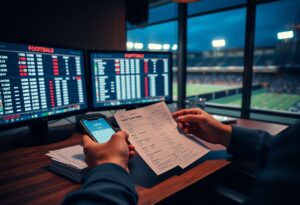
Overall, this guide explores the cognitive drivers behind special football bets-how novelty, social cues and perceived control fuel demand-examining the primary decision biases that make them appealing, the serious risks of impulsive escalation bettors face, and practical ways to harness their engagement and entertainment value responsibly.
Understanding the Types of Special Football Bets
Special bets split into distinct markets that change how bettors assess risk and reward: from single-event props to season-long futures and rapid-fire in-play markets. Major events like the Super Bowl can feature 500+ proposition markets, while futures often settle months later and allow hedging. Operators price these markets differently, creating higher variance opportunities for skilled traders and greater impulse risk for casual punters.
- Proposition Bets
- Futures Bets
- In-Game Betting
- Parlays / Accumulators
- Perceiving Novelty / Special Markets as entertainment often increases wager size
| Proposition Bets | Single-event outcomes (e.g., first scorer, exact score) that can outnumber standard markets during big fixtures. |
| Futures Bets | Season- or tournament-wide markets (winner, top scorer) placed months in advance with long settlement timelines. |
| In-Game Betting | Live markets updated during matches-micro-bets on next event or updated totals priced in seconds. |
| Parlays / Accumulators | Multiple selections chained for bigger payouts but significantly higher variance and lower implied probabilities. |
| Novelty / Specials | Non-traditional markets (player props, entertainment-based bets) often driven by publicity and social sharing. |
Proposition Bets
Many props are highly granular: bookmakers may list dozens to hundreds of player and event props per match, such as “first substitution time” or “player to score twice.” Savvy bettors exploit niche knowledge-injury reports, rotation patterns, or weather-to find edges, while casual bettors are drawn to the variety and storytelling value; the combination produces both entertainment and elevated bookmaker margins.
Futures Bets
Futures let bettors back outcomes like “season champion” months ahead, often at attractive early odds. These markets lock capital for long periods and can drift dramatically after transfers or managerial changes; shops sometimes offer early cash-outs or partial settlements that change the risk profile for traders and casuals alike.
More info: Traders monitor futures using timelines-odds shift after transfer windows, injuries, or form runs: for example, a 10:1 preseason shot can fall to 3:1 after a five-game winning streak. Institutional bettors may size positions and hedge via in-season markets; smaller bettors should note the time-risk and potential for large swings before payout months later.
In-Game Betting
Live betting offers micro-markets-next goal, next corner, player incidents-with odds refreshed every few seconds and automated feeds pricing events in real time. The speed rewards quick decision-making and data access; markets can be volatile, and latency or delayed streams create exploitable discrepancies if you act faster than the bookie adjusts.
More info: Advanced live bettors use statistics like expected goals (xG) in 5-15 minute windows, substitution patterns, and referee tendencies to trade positions; bookmakers counter with dynamic limits and variable margins. Effective strategies include small, frequent stakes and hedging across correlated markets to manage the heightened emotional and execution risks of rapid-fire wagering.
Key Factors Influencing Popularity
Multiple market and cognitive drivers fuel interest in special football bets, including novelty, perceived value, and emotional storytelling around players or match incidents. Bookmakers design markets to exploit quick wins and attention cycles, and mobile in-play features increase bet frequency. Research and operator reports often cite double-digit uplifts in engagement for novelty markets versus standard bets. Assume that concentrated promotion, enhanced odds framing and social sharing turn fleeting curiosity into habitual micro-betting.
- Novelty appeal – unique events and storyline-driven markets.
- Psychological triggers – near-miss effects, reinforcement schedules, and gambler’s fallacy.
- Social influence – peer tips, leaderboards, and viral content.
- Operator incentives – higher margins on props and targeted promos.
- Accessibility – mobile in-play, micro-bets, and instant cash-out options.
Psychological Triggers
Sensory and cognitive biases make special bets appealing: the near-miss effect and variable-ratio reinforcement both increase persistence, while framing a long odds market as “possible” exploits optimism bias. For example, micro-rewards from small wins produce measurable dopamine responses similar to slot play; experimental studies suggest near-misses can raise persistence by roughly 30-40%. Operators leverage this with rapid settlement and repeated tiny-stake markets to sustain engagement, creating both high attraction and elevated risk of impulse wagering.
Social Influence and Peer Pressure
Social cues amplify uptake: shared tips, group bets and public winner feeds provide strong social proof, and conformity pressures push casual viewers into placing novelty wagers. Platforms that surface friends’ bets or trending markets see higher conversion, often a double-digit increase in event participation. When bettors perceive a strategy as popular, they overweight anecdotal success and may ignore objective house edge, normalizing riskier behavior in peer settings.
More deeply, social mechanics operate via explicit and implicit channels: WhatsApp tipsters, pub banter, influencer posts and in-app notifications all lower the friction to act. Betting pools and syndicates add economic rationale-shared stakes reduce perceived individual loss-while leaderboards and bragging rights create status incentives. That combination both accelerates adoption and masks cumulative harms, since normalization of micro-bets hides the increased volatility and higher long-term losses associated with many special markets.
Essential Tips for Successful Betting
Practical tactics separate hobbyists from consistent bettors: emphasize data-driven choices, disciplined staking, and objective evaluation of market lines. Track results, log assumptions, and use simple models to avoid overfitting; many specials suffer from small samples and volatility. Prioritize risk control and line shopping to protect long-term ROI. The short list below highlights core skills to prioritize.
- Research
- Bankroll Management
- Understanding Odds
- Value Betting
- Emotion Control
Research and Data Analysis
Use objective metrics like xG, head-to-head trends, injury reports and bookmaker line moves; aim for sample sizes >500 events when testing models. Run simple Poisson or logistic models for goals and compare outputs to market-implied probabilities; if your model yields 0.35 probability while the market implies 0.28, that gap signals potential value. Avoid overfitting to recent noise and validate on out-of-sample data.
Bankroll Management
Stake sizing should limit downside: many pros recommend fixed stakes of 1-3% of bankroll per wager or a conservative Kelly fraction; avoid bets >5% which materially raise ruin risk. Track volatility, set loss limits, and never chase losses-chasing losses amplifies drawdowns and behavioral bias.
Implement practical rules: with a $1,000 bankroll, a 2% stake equals $20 per bet; use flat staking for high-variance specials and fractional Kelly when you have a reliable edge. Maintain a separate pot for speculative specials, record every wager, and cut stakes after prolonged negative runs to preserve capital and statistical power.
Understanding Odds
Convert odds to implied probability to spot discrepancies: decimal odds of 3.50 imply 28.57% chance (1/3.50). If your model estimates 35% true probability, the bet contains positive expected value. Learn differences between decimal, fractional and American formats, and factor in market margins when comparing your model to bookmaker prices.
Dive into bookmaker margin and line dynamics: many markets carry 3-6% vigorish, so adjust implied probabilities upward when computing value. Shop multiple books or exchanges to reduce friction, monitor line moves for sharp action, and use expected value calculations (EV = true_prob*(odds-1) – (1-true_prob)) to prioritize bets with the highest long-term contribution.
Step-by-Step Guide to Placing Special Bets
Quick Process Overview
| Step | Action |
| Research | Scan team news, set-piece rates, recent player form and bookmaker line movement. |
| Identify Value | Compare implied probabilities across 3+ bookmakers; flag odds that diverge by ≥10%. |
| Size Stakes | Apply a staking plan (fixed %, fractional Kelly) and cap exposure per market. |
| Place Bet | Confirm market liquidity, account limits and execute pre-match or in-play depending on edge. |
| Track & Review | Log outcomes, ROI, and adjust models after 20+ samples per market. |
Identifying Betting Opportunities
Scan for actionable anomalies: a striker with 6+ shots on target in five games facing a defense conceding set-piece goals (0.45 per match), odds that have drifted >10% overnight, or markets where bookmakers underprice substitutes and corners. Use lineups, suspension lists and expected goals (xG) to spot mismatches; prioritize markets offering value while noting short-priced traps that hide low upside.
Making Informed Decisions
Combine objective metrics-xG, shot maps, average minutes, and head-to-head trends-with market signals like liquidity and arbitrage gaps; for example, if a market implies a 25% chance but your model estimates 32%, that represents a clear edge. Weight recent form over long-term averages when sample sizes are small and flag high-variance markets as dangerous for large stakes.
Apply a simple value calculation: implied probability = 1/odds; compare it to your modeled probability. Example: player anytime scorer at 4.00 implies 25% but historical conversion from similar position is 30% (edge = 5%). Use a fractional Kelly (e.g., 25-50% of Kelly) to convert that edge into a stake; with a £1,000 bankroll and a 5% edge, full Kelly might suggest 6%-so a 1.5-3% stake preserves capital while exploiting the advantage. Track model calibration over at least 50 bets per market and adjust for bookmaker margin and sample bias.
Executing Your Bets
Confirm market depth and account limits before committing: place wagers at multiple bookmakers to capture best odds and avoid late restrictions. Use pre-match locks when odds are favorable, or move to in-play if you can react to early match events; always enforce your predetermined stake and avoid chasing losses-this protects bankroll and exploits identified advantages without increasing exposure to dangerous variance.
Operationally, maintain a betting log (date, market, odds, stake, outcome, model probability) and use tools like price alerts or API feeds to act on shifts >5-10%. For stake sizing, example: bankroll £2,000, fractional Kelly recommends 2%-4% per quantified edge; set automated bets where possible and double-check limits to prevent forced partial fills. Finally, reconcile transaction costs, void rules and cash-out penalties into net-expected-value calculations to ensure execution doesn’t erode the theoretical edge.
Pros and Cons of Special Football Bets
| Pros | Cons |
|---|---|
| Higher odds on niche events provide big payout potential for small stakes. | Bookmaker margins on specials are often larger, typically 6-12%. |
| Ability to exploit regional or player-specific knowledge in obscure markets. | Very high variance: long-shot props can have win rates below 20%. |
| In-play specials allow dynamic hedging and live trading opportunities. | Complex correlations mean one event outcome can invalidate multiple bets simultaneously. |
| Enhanced engagement for fans-keeps interest throughout a match. | Data scarcity in lower leagues increases mispricing and unpredictability. |
| Market inefficiencies exist; skilled bettors can find edges of 2-5% ROI. | Sharp bookmakers may limit or restrict winning accounts, capping returns. |
| Low-stake experimentation is feasible-try strategies with minimal bankroll exposure. | Psychological traps: chasing long shots often leads to bigger losses. |
| Variety of markets (player stats, events) allows portfolio diversification. | Occasional market suspensions or voids can frustrate strategies and lock funds. |
Advantages of Betting on Specials
Many specials offer odds of 5/1 or higher on player or event props, so a £10 stake at 6/1 returns £70 including stake; that makes small-stake strategies attractive. Professional punters exploit niche markets-using scouting, minutes-played data and team tactics-to find edges of roughly 2-5% ROI. Live markets also let traders hedge losses mid-game, turning volatile outcomes into controlled exposures while boosting engagement and entertainment value.
Disadvantages and Risks
Specials carry elevated risk: bookmakers often build larger margins, and volatility means many long-shot props have win rates under 20%, producing wide drawdowns. Account limits and market suspensions further reduce practical profitability for successful players, while psychological bias makes chasing big-odds losses common.
Digging deeper, sample-size problems and hidden correlations are major issues: a “player to score” bet ignores game state, substitutions and tactical shifts, so a perceived edge can evaporate after a few matches. Integrity concerns are more pronounced in lower leagues where data and oversight are sparse, increasing tail-risk. Exchanges may void markets or suspend trading when irregular patterns appear, and bookmakers routinely adjust lines quickly once sharp money arrives, eroding initial value. Effective risk management therefore requires strict staking plans, robust data, and contingency rules for suspensions or account limitations.
Conclusion
With this in mind, special football bets thrive because they tap into cognitive biases-salience of outcomes, illusion of control, and the allure of immediate rewards-while offering variety and social validation that heighten engagement. Bookmakers’ framing and low-cost entry encourage experimentation, and the emotional highs from wins reinforce repeat play through dopamine-driven learning, making these markets both entertaining and habit-forming.
FAQ
Q: Why do special football bets feel more appealing than standard wagers?
A: Special bets offer novelty and immediacy: unusual markets (first goal scorer, exact scorelines, player props) create short-term excitement and frequent opportunities to engage during a single match. They often allow lower stakes with the promise of outsized returns, generating a strong reward signal in the brain. Bookmakers frame these markets with vivid, memorable outcomes that stand out from generic match-winner bets, increasing salience and making players more likely to place impulsive wagers driven by emotional arousal rather than cold probability assessment.
Q: Which psychological biases most commonly drive people toward special football bets?
A: Several biases combine to boost demand: the illusion of control and overconfidence lead bettors to overestimate their ability to predict isolated events; the availability heuristic makes dramatic outcomes seem more likely because they are easier to recall; the near‑miss effect (almost winning) reinforces continued play; loss aversion and the disposition effect can cause chasing behavior after small losses; and framing/anchoring from odds presentation makes certain outcomes look more attractive. Together these biases distort risk perception and inflate the perceived value of niche markets.
Q: How do bookmakers and social factors amplify their popularity, and what risks should bettors be aware of?
A: Operators use targeted promotions, in‑play micro-markets, push notifications, and gamified interfaces to increase engagement and push bettors toward special markets. Social media and group chat amplify novelty bets through shareable scores and highlight reels, creating peer-driven momentum. Risks include higher betting frequency, underestimating cumulative losses, and misjudging the true house edge on exotic lines. Practical precautions are to set strict stake and session limits, track results, avoid chasing losses, and treat special bets as entertainment rather than a reliable strategy for profit.