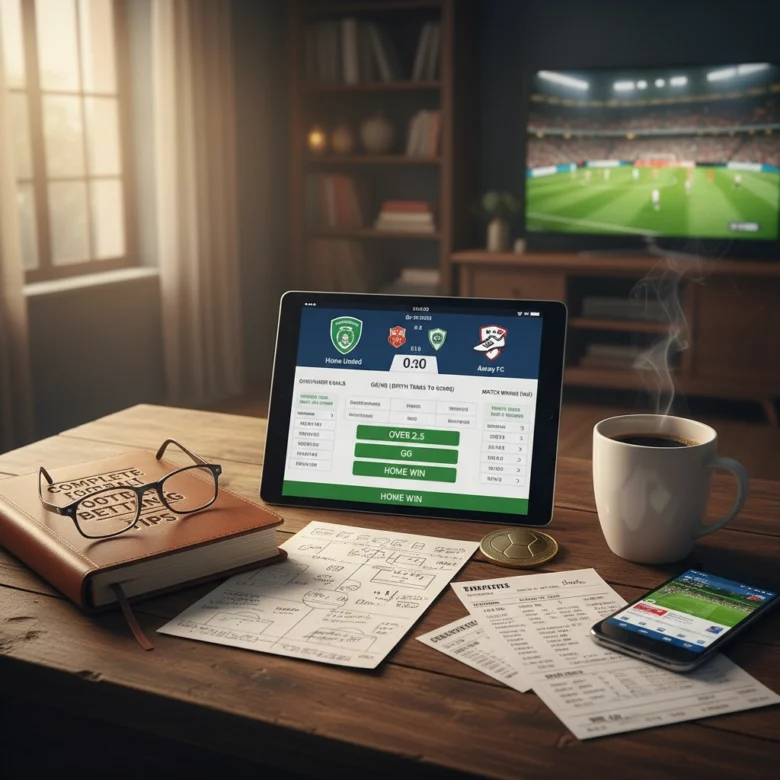
Why mastering Over/Under, GG/NG and Match Winner bets changes how you approach football betting
You probably already place straight match-winner bets, but adding Over/Under and GG/NG markets to your toolbox gives you flexibility and better risk control. Each market answers a different question: will more goals be scored, will both teams find the net, or which team will win? By separating outcome-based bets (match winner) from event-based bets (goals scored or both teams scoring), you can target specific match dynamics and find edges bookmakers may have missed.
In practice, using these markets together lets you tailor stakes and reduce variance. For example, a tight defensive matchup might be a low-risk Under 2.5 play even if the match-winner price isn’t attractive. Conversely, a fixture with two attack-minded teams could offer value on GG (both teams to score) regardless of the outright odds. Learning when to apply each market is the first step toward consistent profitability.
Core concepts you need to know before placing Over/Under, GG/NG or Match Winner bets
What Over/Under bets measure and how to read the lines
Over/Under markets most commonly use thresholds like 0.5, 1.5, 2.5, 3.5 goals. You’re betting on the total goals in a match being above or below that number. Over 2.5 means three or more goals; Under 2.5 means two or fewer. Lower thresholds are more binary and pay smaller odds; higher thresholds are riskier but pay better. Check how a bookmaker handles dead heats and extra time for cup games.
GG/NG (Both Teams to Score): when it’s the smarter alternative
GG (Yes) wins if both sides score at least once; NG (No) means one or both teams keep a clean sheet. This market isolates scoring balance without caring about the final result. GG is useful when two offensive teams meet but match-winner markets are unpredictable. NG can be valuable in mismatches where the favorite is defense-oriented or when weather/lineups suggest a low-scoring game.
Match Winner: straight up and Asian handicaps
Match-winner bets are simplest but often have higher bookmaker margins. You can back home, away, or draw. To manage risk, consider Asian handicaps (half-goals or full-goals) which remove the draw or reduce variance with “half-win/half-push” outcomes. Match-winner markets are best when you have conviction from form, injuries, or tactical matchups.
- Quick checks before you bet: recent goals per game, injuries to key scorers/defenders, head-to-head trends, and weather.
- Watch market movement: sharp money can indicate value or insider information; sudden shifts often reflect new news like a late lineup change.
- Consider implied probability: convert odds to a percentage to judge whether the bookmaker has given you value.
With these foundations in place — what each market measures and the quick checks you should do — you’re ready to dive into how to analyze specific matches, use advanced metrics like expected goals (xG), and construct a staking plan to exploit value. In the next section, you’ll learn step-by-step methods for evaluating form, xG, and tactical setups to pick the best market for each fixture.
Match analysis: step-by-step use of form, xG and tactical fit
Start with a checklist you can run through quickly before placing a bet. Make it a routine so you don’t miss subtle edges.
– Recent form (last 6–8 matches): look beyond results. Compare goals scored/conceded per game, but weight the most recent fixtures more highly. A team on an upward trend with the same manager and core lineup is more reliable than one riding a single upset.
– Expected goals (xG): use both xG for (xGf) and xG against (xGa). If a team’s xGf is higher than actual goals, they’re likely unlucky and more likely to score going forward. A team conceding high xGa but few goals may be vulnerable to regression — useful for Over or GG plays.
– Shot quality and chance creation: prioritize shots in box, big chances, and shot-on-target percentage. High volume of low-value shots isn’t the same as a few high-quality chances.
– Defensive structure and pressing: teams that sit deep and concede few big chances (low xGa, low PPDA or pressing intensity) favor Under/NG. High press teams that leave space behind can create chaotic matches better suited to Over/GG.
– Lineups and key absences: missing a central striker often reduces conversion rates; losing a full-back who provides crosses can reduce goal threat. Late lineup news should move you to live markets, not blind pre-match bets.
– Head-to-head and situational context: some teams consistently produce low or high-scoring H2Hs. Also account for motivation — relegation battles and cup ties with rotations will change expected output.
Use these inputs to form a coherent narrative: “Team A presses high, creates high xG but misses chances — likely Over 1.5 and GG; Team B defends deep with low xG conceded — favors Under 2.5/NG.”
Choosing the right market from your analysis
Translate analysis into market selection with a clear decision rule.
– Favor Over/Under when xG totals (xGf + opponent xGf) significantly differ from bookmakers’ implied totals. If both teams average combined xG around 3.0 but the market sits at 2.25, that’s a signal.
– Choose GG/NG when attacking balance diverges from match-winner clarity. If both sides create clear chances but conversion is unreliable, GG gives you isolated exposure to both teams scoring without needing a specific winner.
– Pick Match Winner or Asian Handicap when tactical matchups and lineup strength create a decisive edge (missing key defender for the favorite, one team forms a defensive block vulnerable to set piece specialists, etc.). Use Asian handicaps to remove the draw or reduce juice.
– Combine markets sensibly: small correlated stakes can be used as insurance (e.g., larger stake on fav to win, smaller on NG or Under as hedge) — but track correlation risk: if markets are highly correlated, your exposure is effectively larger than intended.
Keep a simple rule: only place a bet when your implied probability model (based on xG, form, and news) gives you at least a 5–8% edge over the bookmaker’s price. If not, skip or look for better alternatives.
Practical staking plans and bankroll rules for combined markets
Protecting capital is as important as finding value.
– Unit sizing: define a unit (1%–2% of bankroll for conservative bettors). Scale stakes by confidence: 0.5 units (low), 1 unit (standard), 2–3 units (strong conviction).
– Kelly-lite: if you estimate an edge, use a fractional Kelly (10–25% of full Kelly) to size bets more aggressively but safely.
– Portfolio approach: avoid concentrating on correlated bets. If you place multiple bets on the same match (winner + GG/Under), treat the combined exposure as one position and reduce stakes accordingly.
– Loss management: cap daily losses (e.g., 5% of bankroll per day) and avoid chasing losses with larger stakes.
– Record keeping: log stake, odds, market, model edge, and outcome. Review monthly to identify which markets and strategies consistently provide value.
Apply these rules consistently and you’ll reduce variance while maximizing the long-term payoff from the edges you find across Over/Under, GG/NG and Match Winner markets.
In-play adjustments and live-trading quick rules
- Watch the opening 15 minutes: teams may show true intent (high press, deep block) that contradicts pre-match models. If the game’s tone changes, shrink stakes or move to smaller live markets.
- Use live xG and shot maps where available: a sudden surge in quality chances after substitutions is a stronger signal than possession percentage alone.
- Manage hedge logic clearly: decide before placing a pre-match combo what conditions will trigger a live hedge (e.g., red card, early goal against, tactical switch).
- Keep execution simple: prefer one clear live market (Next Goal, Over/Under add-on) rather than multiple fragmented positions that are hard to monitor.
- Control emotions: if you’re chasing a loss mid-game, stop. Live markets amplify variance; stick to your staking rules.
Putting your process into regular practice
Treat betting as a skill you improve through disciplined routines: refine your checklist, test hypotheses with small stakes, and iterate based on real results. Build templates for pre-match notes (form, xG, tactical edges, absence impact) so you can quickly convert analysis into market decisions. When in doubt, pause and prioritize preserving capital and learning over forcing action. For additional data sources and xG visualizations you can integrate into your process, check Understat.
Frequently Asked Questions
How do I decide between Over/Under and GG/NG for a given match?
Compare combined xG totals to the bookmaker’s over/under line and examine both teams’ chance quality. If total xG suggests more goals than the market and both teams create chances, Over and GG are candidates. If one team is likely to score and the other is highly defensive or missing key attackers, Under or NG may be preferable. Always require a meaningful edge (5–8% or more) before betting.
When is an Asian handicap a better choice than a straight Match Winner?
Use Asian handicaps when you expect a clear favorite but want to reduce draw risk or lower the juice. They’re also useful when the implied model edge is moderate—handicaps allow you to remove a draw (Asian -0.5) or get partial refund (Asian -0.25/-0.75) and thus manage variance while still backing a team expected to outperform.
How should I size bets when placing multiple correlated markets on the same match?
Treat correlated positions as a single exposure. Calculate worst-case and likely-case outcomes, then reduce stakes so total risk aligns with your unit sizing rules. For example, if you plan 1 unit on Match Winner and 0.5 on GG for the same match, consider lowering each so combined exposure equals your intended maximum (e.g., 1 unit total), rather than risking 1.5 units unintentionally.