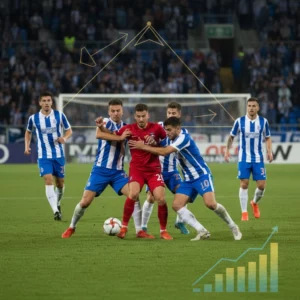

How a high press formation changes the flow of a game you’re watching
When a team commits to a high press, you’ll notice the entire shape of play move up the field. You’re not just watching more aggressive defending — you’re watching a deliberate strategy to win the ball in dangerous areas, force rushed passes, and create quick transitions. For bettors, understanding this shift matters because it alters key match variables that bookmakers model: expected goals (xG), possession profiles, duel rates, and the likelihood of set pieces or cards. Recognizing a high press early gives you an edge in both pre-match selection and in-play opportunities.
Typical formations and player roles that signal a committed high press
High pressing can be executed from several formations, but the common thread is forward positioning and coordinated triggers for pressure. Look for these formations and role adjustments:
- 4-3-3 — forwards push up to pin opposing centre-backs, midfield three press in lanes to cut passing options.
- 4-2-3-1 — the #10 and wingers press the midfielders and fullbacks, while the single striker targets the centre-backs.
- 3-4-3 or 3-5-2 with narrow midfielders — wingbacks push high while three attackers compress central passing angles.
- Triggers and coordination — you’ll see coordinated steps: a forward closing the nearest centre-back, midfielders cutting inside passing lanes, and fullbacks squeezing up to limit outlets.
These shapes increase turnovers high up the pitch, which produces short-term surges in shot volume and corner potential. You can spot a committed press from lineups (aggressive wingers, mobile midfielders, high fullbacks) and pre-match comments from coaches about “intensity” or “pressure.”
Immediate betting-market impacts you can expect when a team presses high
Bookmakers price markets using models that assume average defensive positioning. A team pressing high distorts those assumptions and produces predictable shifts:
- Over/Under (goals) — a successful press tends to increase short-term xG and shot volume, lifting over/under probabilities, especially in the first 20–30 minutes.
- First-half markets — early corners, shots on target, and goals become likelier, pushing up first-half market values.
- Card and foul markets — increased duels and frantic defending near the box raise the chance of fouls and yellow cards.
- Live odds volatility — when a press forces turnovers, in-play prices swing faster; you’ll often find value in quick, targeted bets (shots on target, corners, short-term goal lines).
- Player props — strikers who press well or midfielders who win possession high can see elevated chances for tackles, interceptions, or touches in the box.
Quantitative indicators you should watch pre-match include PPDA (passes allowed per defensive action), pressing efficiency, and recent turnover locations by team. These metrics are how you translate tactical observation into actionable betting signals.
In the next section you’ll examine which statistical indicators reliably measure pressing intensity, how bookmakers adjust live models, and practical in-play strategies to exploit those adjustments.
Measuring pressing intensity: the stats that actually correlate with high pressing
To turn tactical observation into reliable betting signals you need repeatable metrics. The most useful are those that capture both how often a team pressures and where those pressures produce turnovers or shot opportunities. Focus on these indicators:
- PPDA (Passes Per Defensive Action) — lower is more aggressive. Teams consistently under ~9–10 PPDA are usually committing to an intense press; persistent readings in that band across several matches are a stronger signal than a single-game dip.
- Pressures per 90 / pressures in the final third — raw pressure counts show activity, but the location matters: pressures in the opponent’s half (and especially the final third) are the ones that convert into corners and shots.
- Turnover location and conversion — the percentage of turnovers won inside the attacking third or near the box is a direct predictor of increased xG. Track how many turnovers lead to a shot or corner within 10–20 seconds.
- Shot volume and xG timeline — an uptick in shot attempts and aggregate xG early in the match is an immediate confirmation that a press is working; bookmakers react to these trends, so watch minute-by-minute xG graphs where available.
- Opponent metrics under pressure — look at the opposition’s passing completion or progressive passes when pressed. Teams that can still play through pressure (good ball-playing CBs, composed keeper) blunt the press and create counter opportunities.
Use multi-game averages rather than single-game spikes. Pressing is a trend strategy: bettors are rewarded when a team’s pressing profile is stable and the opposition is vulnerable to it.
How bookmakers update live models — common lags and exploitable mispricings
Bookmakers and trading desks feed live events into models that re-weight probabilities every time the game state changes. But they don’t all react to the same signals at the same speed, which creates value pockets.
- What they react to immediately — shots, on-target attempts, and goals change xG and goal markets almost instantly. Corners and cards follow shortly after because they’re discrete events with clear market impact.
- What lags — sustained tactical behaviors (a high defensive line, prolonged pressure, repeated turnovers in the final third) take longer to integrate. Trading algorithms that focus on event-driven inputs underweight these sustained trends for several minutes.
- Where value appears — in the first 10–25 minutes of a successful press you’ll often see underpriced first-half overs, short-term goal lines (next 10/15 minutes), and corners. Exchanges and smaller bookmakers that update faster will reflect the trend quicker; larger books can lag and offer overlays.
Practical implication: identify the press early with the metrics above, target fast-reacting markets (shots, corners, short timeframe overs), and prefer platforms where you can trade out quickly if the press collapses or the opponent adapts.

In-play tactics to exploit a high press
When you’ve identified a genuine high press early, move quickly and focus on short, liquid markets that react to the behaviors you’re seeing. Practical in-play tactics include:
- Target short-window over markets (next 10–15 minutes) rather than full-game totals when pressure is sustained—these markets capture sudden xG spikes without overcommitting to a full 90 minutes.
- Use corner and shot markets: a successful press produces corners and low-quality shot volume before it produces goals, and those markets are often slower to reprice.
- Bet player props tied to pressing roles (tackles, interceptions, touches in the box) when lineups show known pressers; these props can move in your favor quickly.
- Watch the opponent’s ball progressors—if they’re still completing long passes or goal kicks under pressure, be ready to hedge as the press may be blunted and counters become likelier.
- Manage risk with size and speed: place smaller, frequent stakes early while monitoring minute-by-minute xG charts; prefer platforms with fast execution or exchange trading so you can trade out when markets correct.
Final thoughts on using pressing as a betting edge
Pressing is a tactical signal that, when identified and quantified, becomes a source of repeatable betting edges. The edge comes less from knowing what a press is and more from recognizing the persistence of that press, its locations on the field, and how quickly markets react. Stay disciplined: use multi-game pressing profiles, combine tactical reads with live xG and pressure metrics, and always plan exit rules in case the opponent adapts. For deeper technical background on how pressing is measured and commonly reported metrics, see StatsBomb analysis of pressing.
Frequently Asked Questions
How quickly do bookmakers usually adjust when a team starts pressing high?
It depends on the bookmaker and the market. Event-driven markets (shots, on-target, goals) update almost instantly; corners and cards follow shortly. Larger sportsbooks may lag on sustained tactical behaviors (high line, repeated turnovers) by several minutes, creating short windows of value in minute-specific markets.
Which single metric should I watch first to confirm a team is pressing aggressively?
PPDA (passes per defensive action) is the best single quick-check: lower values indicate more aggressive pressing. Pair PPDA with pressures in the final third or turnover location to confirm the press is producing attacking opportunities.
Can a high press backfire from a betting perspective, and how should I manage that risk?
Yes. A press can be repeatedly bypassed by long balls, quick switches, or a composed goalkeeper, turning expected overloads into counter-attacking opportunities for the opponent. Manage this by sizing stakes conservatively, using short-duration bets, and having predefined hedges or cash-out thresholds when the opponent begins to exploit space behind the press.