

How pressing and off-the-ball movement shape match outcomes you can bet on
You can improve your betting by treating matches as tactical contests, not just statistical events. Pressing systems and off-the-ball positioning are two of the most reliable tactical signals that change where and how goals are created, how possession flows, and which markets move during a game. When you learn to recognize how a team presses and how players occupy space without the ball, you gain early-warning indicators for live bets, correct score plays, and value in pre-match markets.
Start by observing the basics before diving into markets: is a team committing numbers high up the pitch? Are attackers dropping to create overloads or width? Those visible cues translate into measurable outcomes — turnovers, expected goals (xG) shifts, and set-piece frequency — all of which affect odds. You don’t need to be a coach to spot meaningful patterns; you need to know what to look for and which markets are sensitive to those patterns.
Recognizing pressing systems and the betting signals they create
Pressing systems vary (high press, mid-block, low block) and each produces different betting opportunities. You should focus on structure and intent: who initiates the press, how quickly the team reorients after losing the ball, and whether pressing leads to consistent turnovers in dangerous zones. These observations help you predict market moves with more confidence.
- High press — teams force mistakes in the opponent’s half. Betting signals: increased shots on target, short-lived possession sequences, and a higher chance of early goals. Look for value in early match goal markets and anytime scorer props for aggressive forwards.
- Mid-block with counter-press — you’ll often see transitions where the pressing team wins the ball and immediately attacks. Betting signals: spikes in expected goals after turnovers and profitable live bets on quick second-half goals following midfield turnovers.
- Low block — compact defensive shape reduces open-play chances but increases set-piece incidents. Betting signals: lower match total goals but higher probability of corners and long-range attempts; consider targeting corners and under/over markets accordingly.
Interpreting off-the-ball positioning to refine market choices
Off-the-ball positioning determines space creation and passing lanes. You should track how wide midfielders hold their positions, whether full-backs invert or overlap, and how attackers drag defenders out of lines. Those patterns change where chances originate and which players are most likely to be involved in goal actions.
- Wide overloads and active full-backs often lead to crosses and more corners — a signal to favor corner markets or crossing-related bets.
- False-nine or dropping strikers create space for midfield runners; this increases through-balls and shots from the edge of the box, affecting xG and shots-on-target markets.
- Compact central shapes from one team can force the opponent wide, increasing crossing volume but lowering clear-cut chances — useful for combining corner and under-goals bets.
With these early reads you can start aligning tactical observations with specific betting markets. In the next section you’ll learn practical workflows for pre-match scouting and live-monitor checks so you can convert those tactical reads into concrete bets.
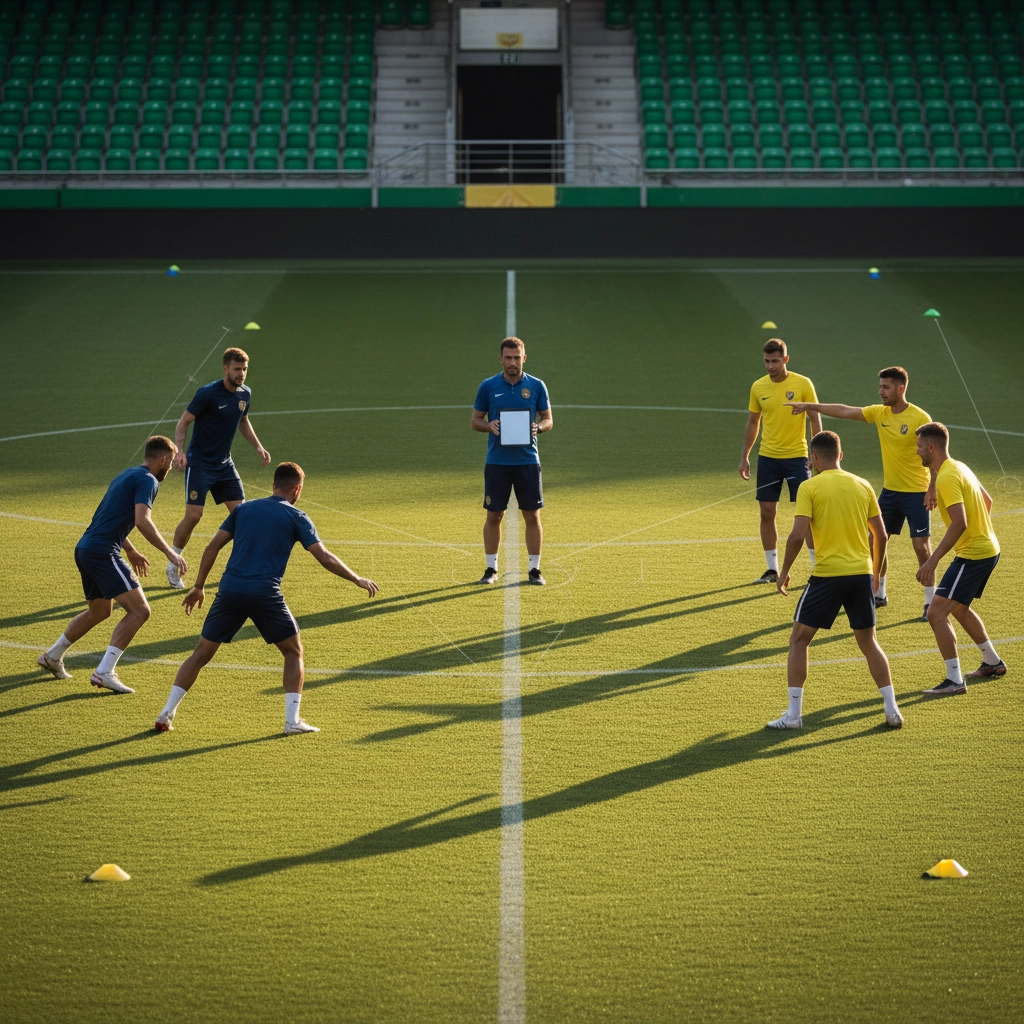
Pre-match scouting workflow: turning tactical reads into market models
Pre-match preparation should be systematic so you can translate tactical tendencies into specific market calls. Treat each match like a checklist of observable inputs that map to markets and probabilities. Below is a compact workflow you can complete in 20–40 minutes per fixture.
- Step 1 — Quick profile (5 minutes): Record pressing style (high/mid/low), primary formation, and whether the team relies on wing play or central penetration. Note any recent lineup changes (full-back rotated, striker injured) because role shifts change off-the-ball patterns quickly.
- Step 2 — Data signals (5–10 minutes): Pull recent xG per 90, open-play xG, corners per match, and set-piece goals % for both teams. These numbers give you baseline priors to compare against tactical reads (for instance, a low-block team with high corners suggests sustained wide pressure).
- Step 3 — Video sampling (10–15 minutes): Watch clips or condensed matches focusing on the first 15–20 minutes of recent games for the press initiator and transitions. Look for where turnovers occur (final third, half-space, wing) and which players exploit the space off the ball (overlapping full-backs, late midfield runners).
- Step 4 — Market mapping (5 minutes): Convert observations into market signals. Examples:
- High press + frequent turnovers in final third → value in early goal markets, Anytime Scorer for aggressive forwards, and both teams to score (BTTS) if the opponent counters effectively.
- Low block + tall attacking team → corners and set-piece markets, under 2.5 goals for match totals.
- Wide overloads + overlapping full-backs → corners, crossing markets, and assists for full-backs.
- Step 5 — Stake sizing and limits: Determine your max stake and split for pre-match vs live. Allocate a smaller portion to live in-play plays since dynamics can change; keep pre-match bets conservative unless you detect a structural disconnect between odds and tactical reality.
Live-monitor checklist and how to execute in-play bets
Live betting rewards fast, disciplined reading of what you already scouted. Use a short checklist during the match to confirm or invalidate your pre-match model before committing money.
- First 15 minutes: Confirm pressing intent and turnover zones. If the team you expected to press is passive, cash in on under-expectation markets (e.g., lower goal probabilities). If pressing is more intense than expected, look for early goal and shots-on-target markets.
- Transition moments: Watch the first clear turnover after a press — does the pressing side immediately create an xG chance? If yes, enter short-window prop bets (next 10–20 minutes goal/goal attempts). If turnover leads to safe possession, avoid quick speculative stakes.
- Set-piece triggers: If one team wins multiple corners or free-kicks in dangerous areas within a short period, odds on corner-related markets and certain-player assist/goal props drift in your favor — that’s often the moment to strike.
- Substitutions and fatigue: Late full-back or central midfielder substitutions often change off-the-ball structure. Increased space from tired midfielders increases the likelihood of through-balls and late runners — consider second-half goal markets and accumulator boosts that hinge on increased attack frequency.
Execution tips: keep stake sizes proportional to confidence and time window (smaller for 5–15 minute props), use cash-out or partial hedges if the game state flips, and avoid “chasing” when your model is disproven. Log each trade to refine your pre-match priors over time.

Combining markets intelligently: correlation, exposure, and hedging
When you combine pressing/off-the-ball reads into multi-leg bets, think about correlation rather than just potential payouts. Linked markets (corners + under goals, early goal + striker anytime scorer) compound your edge when both are supported by the same tactical facts; they also amplify losses when your read is wrong.
- Prefer correlated combos that are supported by multiple signals (e.g., high press + elite winger = early goal + winger anytime scorer).
- Avoid over-leveraging on weakly supported correlations (don’t combine low-block under-goals with a corner-heavy team unless you have strong evidence).
- Use small hedges if live events contradict you: a partial lay on a market showing a sudden tactical reversal protects profit without eliminating upside.
By making pre-match scouting and live checks a disciplined workflow you will consistently convert tactical observations into higher-quality bets rather than reactive guesses. Keep refining your checklist and bank the small edges — they add up.
Putting the approach into practice
Turn your tactical reading into a repeatable habit: pick a single pressing/off-the-ball theme to follow each week, keep a short log of pre-match reads vs in-play confirmations, and scale stakes only as your hit-rate and edge become clear. Treat data sources and highlight reels as supplements to what you see live — useful databases like FBref give quick baselines, but the real advantage comes from disciplined observation and sized, time-limited bets. Stay patient, protect your bankroll, and iterate on the checklist until the workflow becomes second nature.
Frequently Asked Questions
How long should I spend scouting a single match before betting?
A focused scouting session can be effective in 20–40 minutes: a 5-minute profile, 5–10 minutes of key stats, 10–15 minutes of video sampling, and 5 minutes to map markets and stakes. If you’re new to the method, allow extra time to train your eye and refine which clips matter most.
Which live signals are the most reliable for in-play entries?
Highest-value live signals are: confirmed pressing intent (first 10–15 minutes), turnovers in specific zones (final third or half-space), sequences generating repeated set-piece pressure (corners/free-kicks inside the box), and visible fatigue or structural substitutions. Use these to trigger short, confidence-weighted props rather than large speculative stakes.
How should I size stakes when combining correlated markets?
Size correlated multi-leg bets conservatively because correlation amplifies variance. Allocate a smaller portion of your unit to combo bets than to standalone plays; consider partial hedges if a live event contradicts your read. A simple rule: risk no more than 1–3% of your bankroll on a single correlated combo unless you have long-term demonstrated edge.