How in-play over/under betting gives you a practical advantage
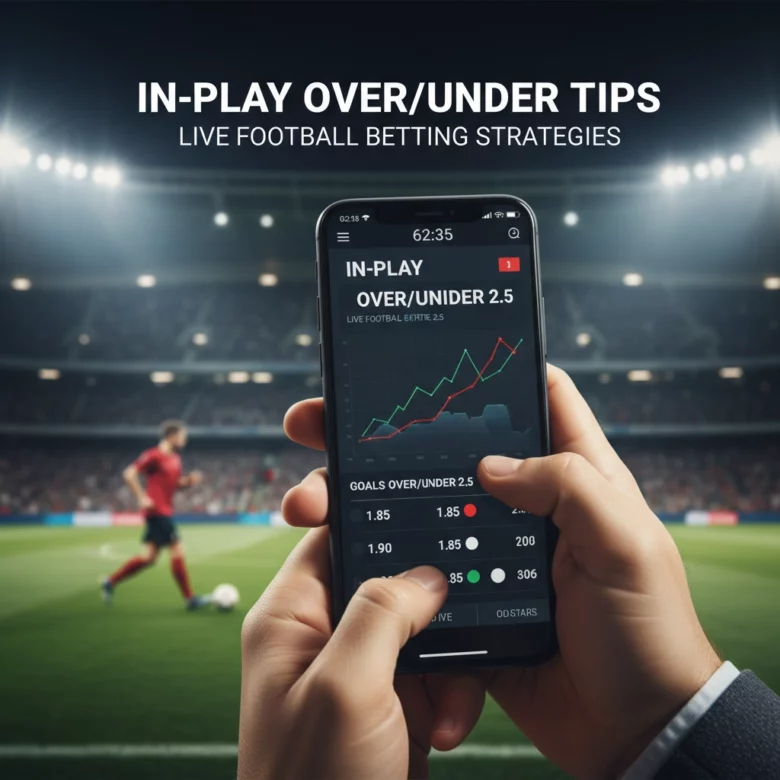
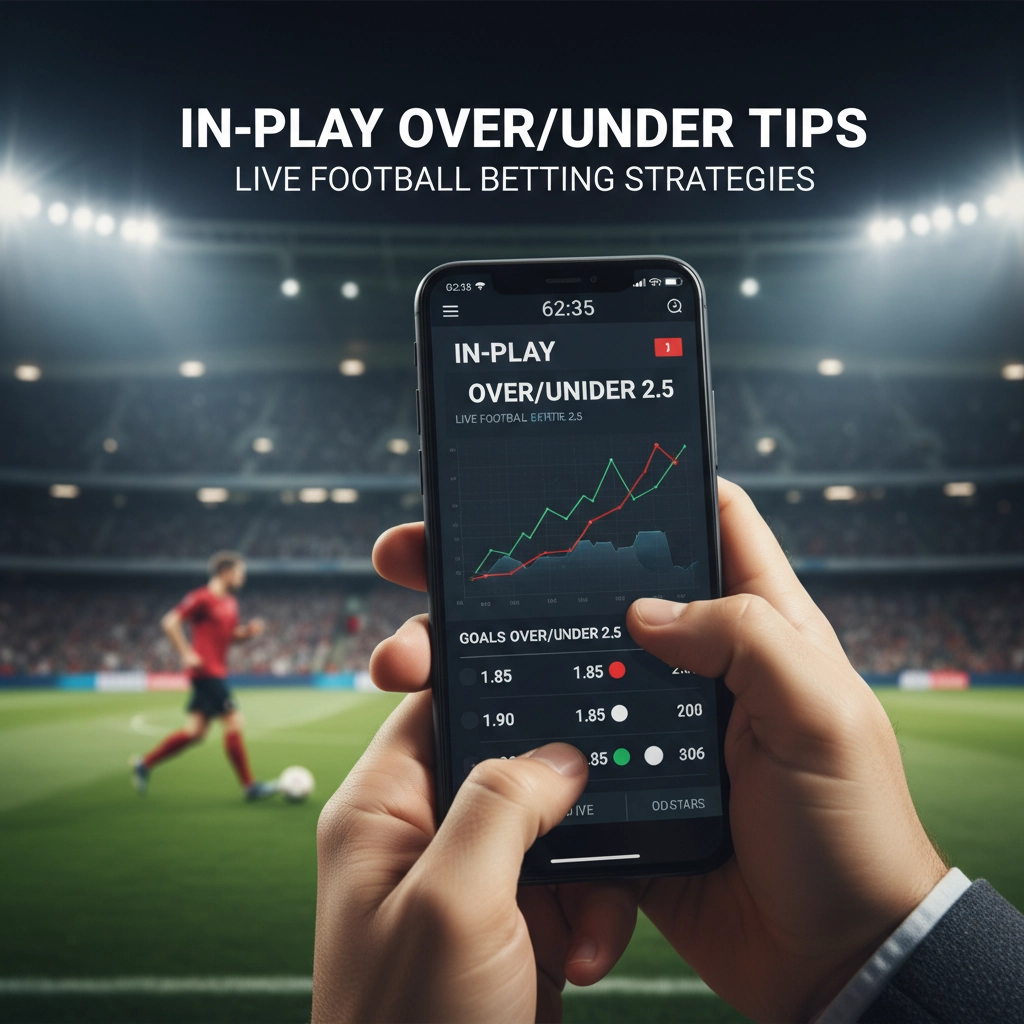
You already know pre-match over/under markets are priced on expected game flow and team strengths. In-play betting lets you react to real events and find value when markets lag or overreact. When you watch the match live, you can identify shifts in tempo, substitutions, and tactical tweaks that the initial odds couldn’t anticipate. That situational awareness is the core advantage: you trade static probability for evolving, observable signals.
In practice, in-play over/under betting rewards a disciplined approach. You should be looking for clear catalysts that change the likelihood of goals — not guessing based on gut feeling. Successful live bettors combine a short checklist of observable events, quick reference stats (like shots on target and corners), and strict stake management so that one surprise goal doesn’t ruin your session.
What to monitor in the opening 15–30 minutes
The early phase of the match is where many live over/under opportunities appear. Within the first 15–30 minutes you can gather reliable signals without overcommitting. Focus on a few high-value indicators that consistently correlate with goal probability:
- Tempo and intent: Are both teams pressing forward or sitting deep? High early pressing and open play increase over probabilities.
- Shots and chances: Count meaningful shots and big chances. A team dominating expected goals (xG) but not scoring may still present over value if momentum persists.
- Corners and set-piece pressure: Repeated corners or dangerous set plays often predict a higher chance of a goal within the next 10–20 minutes.
- Injuries and early substitutions: An early defensive change or a key attacker leaving the field can swing probability toward under or over depending on the replacement and tactical impact.
- Discipline and cards: Early yellows that reduce defensive aggression or a red card drastically change the market — a single red often moves odds strongly toward over.
- Weather and pitch conditions: Heavy rain or a poor pitch slows play and can lower over prospects; conversely, a dry, fast pitch can favour open play and more goals.
Use these signals to judge whether the live market has moved enough to offer value. If the odds on “over” lengthen despite clear attacking dominance, you may have a short window to back the over at a good price. Conversely, if both teams look cautious and the bookmakers shorten “under” unjustifiably, that can be your cue to consider under bets or lay higher-risk over positions.
Quick risk-management rules to apply when betting live
- Stake conservatively: reduce average stake size for live bets since volatility is higher.
- Set pre-defined profit and loss limits per match to avoid emotional chasing.
- Avoid correlated parlays in-play (e.g., combining a team to score and the same match to go over) unless you explicitly price the dependence.
- Use cash-out sparingly: lock in profits on obvious market overreactions, but don’t cure a bad decision by doubling down.
- Keep a short-notes log of why you placed each live bet — this improves long-term discipline and learning.
With these early-phase checks and rules in place, you’ll be ready to move into reading momentum, interpreting live stats (like xG and shots on target), and timing your entries and exits in the next section.
Reading momentum: how to translate live stats into a probability edge
Momentum in football is messy — it’s not just “who has the ball” but who is creating dangerous situations and sustaining pressure. Translate what you see into probability changes by tracking a few compact metrics over short windows (5–20 minutes):
- xG flow: don’t treat single xG readings as gospel: look at cumulative xG over the last 10–15 minutes. Two low-xG shots against followed by a high-quality chance changes scoring probability more than a couple of speculative efforts.
- Post-shot quality: shots from inside the six-yard box, open play headers from crosses, or post-shot xG >0.15 are real danger signals. A stream of such opportunities usually precedes a goal within 10–20 minutes.
- Shot map clustering: if shots and crosses are concentrated on one side, defensive rotations may be failing — that cluster often leads to a set-piece or scramble goal.
- Keeper behaviour: frequent rushed or poor positioning by a goalkeeper signals higher over probability; conversely, a goalkeeper making several high-difficulty saves in a short span can suppress immediate goal expectations (but may lead to regression/goal soon after).
- Substitution impact: not all substitutes are equal — a defensive sub that reduces pressing intensity or an attacking sub that isolates a fatigued full-back can swing probabilities sharply. Give substitutions a 10–25 minute window to manifest before sizing up a bet.
Turn these observations into a simple rule-of-thumb: if two or more danger indicators line up (high post-shot xG, corners, clustered shots, and poor keeper positioning), expect at least a 25–35% increase in short-term goal likelihood versus the pre-game baseline. If the market hasn’t adjusted similarly, you have value to exploit.
Timing entries and exits: windows that consistently offer value
Successful live over/under betting is about timing. There are predictable windows where market inefficiencies commonly appear:
- Immediate post-goal window (0–5 mins): prices often overreact. After a goal, oscillation between over/under lines creates opportunities to back the direction that matches on-field tempo (e.g., a goal that prompts both teams to open up can make “over” briefly underpriced).
- Set-piece sequences (next 10–20 mins): repeated corners or free-kick pressure create a measurable short-term bump in goal probability — prime time to back an over market for the next 10–20 minutes.
- Red card and major tactical shifts (10–30 mins post-event): a red card usually spikes over probability, but the market may take time to fully price long-term fatigue and structural gaps. Consider staggered stakes: take a smaller initial position, increase if pressure sustains.
- Late-game, risk-on windows (75+ mins): teams chasing a result create clear over value — but beware of time decay. Use shorter-duration markets (next 10 minutes, goal in added time) and reduce stake size proportionally to remaining minutes.
Exits: plan them ahead. Use partial cash-outs or exchange lays to lock a profit when live xG and shot pressure reverse, or cut losses if your signal disappears for two consecutive 10-minute blocks. Keeping standard entry sizing and predefined exit triggers prevents emotional reactions and preserves the edge you earned by reading the match correctly.
Putting the framework into practice
Live over/under betting rewards a steady process more than flashy predictions. Treat the game as a stream of evidence: build simple, repeatable rules for entries and exits, keep stakes conservative while you validate signals, and focus on record-keeping so you can separate luck from skill. Discipline around stake sizing, predefined exit triggers, and a willingness to walk away when signals vanish will preserve both your bankroll and the edge you develop.
- Decide in advance which short windows you trade (e.g., next 10 minutes, next goal) and stick to them.
- Only act when at least two danger indicators align; avoid reacting to single isolated events.
- Use small, test-sized stakes while you validate a strategy; increase only after a demonstrated positive expectancy.
- Log every trade (market, time, price, signal, outcome) and review weekly to refine rules and spot biases.
- Lean on live-data tools for real-time shot maps and xG flow, such as Understat, but always cross-check with visual context.
Practice, patience, and process produce consistent results. Protect capital, iterate on what works, and let market inefficiencies present the opportunities rather than forcing action.
Frequently Asked Questions
How quickly should I react to in-play stats like xG flow?
Use short rolling windows (typically 5–20 minutes) to assess xG flow rather than single-event spikes. Wait for confirmation — multiple high-quality chances, clustered shots, or sustained set-piece pressure within that window — before sizing up a bet. Immediate reactions to lone events often lead to overtrading and value erosion.
What stake-sizing approach works best for live over/under betting?
Conservative approaches work best: flat small-percentage stakes of your bankroll (1–2%) or a fractional Kelly method reduce the risk of ruin from variance. For events with uncertainty (e.g., right after a red card), consider staggered stakes: a smaller initial position and a scale-up if pressure persists and signals confirm.
Which live markets and durations typically offer the best value for over/under strategies?
Short-duration markets (next 5–20 minutes, next goal) and events-driven windows (post-set-piece sequences, after a goal, or following a red card) often show the clearest inefficiencies. Avoid betting long-duration lines late in the match where time decay dominates; instead, prefer micro-markets that let you exploit immediate changes in match state.