
Why off-the-ball roles are a hidden edge for smarter soccer bets
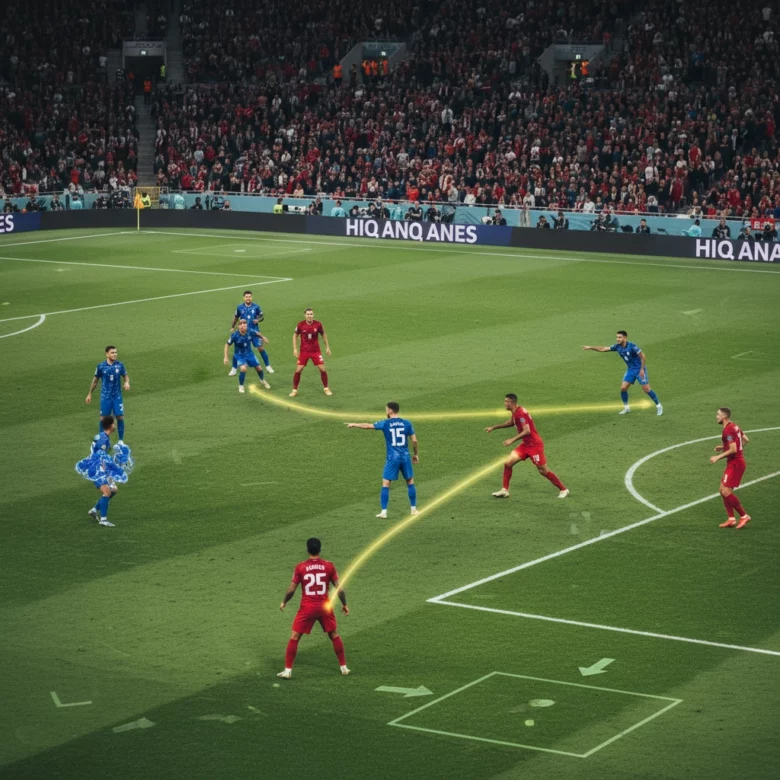
When you watch a match with betting in mind, most attention goes to shots, assists and set pieces. Those on-ball events are obvious, but they are also well priced by bookmakers because they’re visible and tracked. You can gain an edge by valuing what happens away from the ball: runs, positional discipline, pressing triggers and spatial occupation. These off-the-ball actions shape possession progression, create overloads and force defensive errors—outcomes that influence goals, xG and match momentum, all of which affect odds movement.
By training yourself to identify specific off-the-ball roles and how teams deploy them, you can anticipate game-changing moments before the market adjusts. That anticipation helps you target undervalued markets: correct score, total goals, card markets, and player props that reflect involvement rather than only shots or touches.
How to recognize off-the-ball influence before placing a bet
Key player roles and what they imply for markets
- Inverted full-backs — When full-backs tuck into midfield, they change passing lanes and overload central areas. If a team’s full-backs consistently move inside, expect more central build-up and increased xG from through-balls; consider backing higher possession or spread of shots rather than winger-based shot markets.
- False nine or dropping striker — A forward who drops deep pulls centre-backs out of position and opens space for wide runners. That dynamic can lift the likelihood of successful crosses and high-quality chances from the flanks, making player assist or winger shot markets attractive.
- High-press specialists — Teams that press in coordinated waves create turnovers high up the pitch. Early indicators of an effective press can signal more fast-break opportunities and greater probability of early goals, useful for betting on goals in the first half or total goals markets.
- Pivot or deep-lying playmaker — Their ability to recycle possession and switch play reduces frantic counter-attacks. If a pivot is dominant, the match may tilt toward lower-risk chances and fewer long-range efforts, which can influence under/over goal decisions.
Observable cues and data you should check pre-match
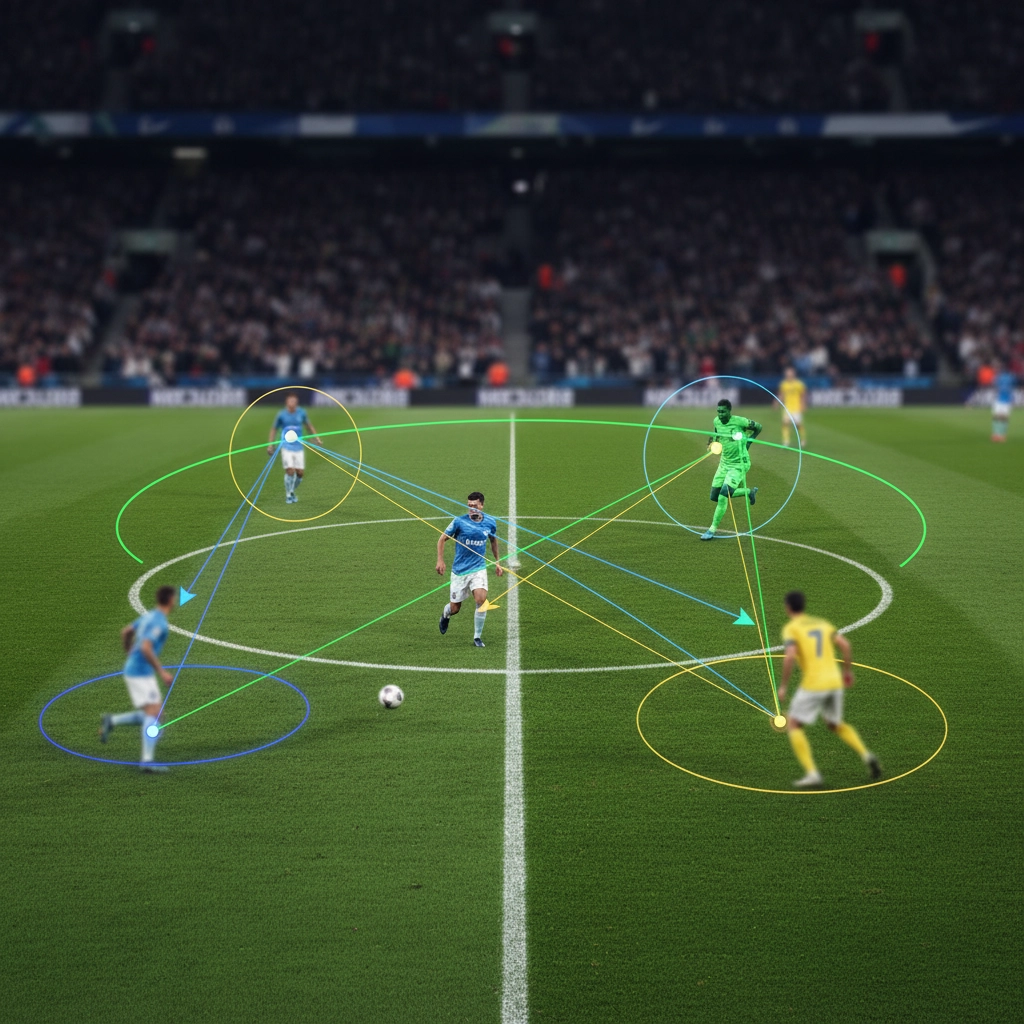
- Heatmaps and average positions: Look for consistent patterns of midfielders or full-backs occupying advanced/central pockets—the shift reveals tactical intent.
- Passing lanes and progressive passes: Players who regularly make runs into half-spaces create progressive pass metrics that correlate with higher xG sequences.
- Press maps and turnovers: Teams with high turnover locations often produce quick, high-quality chances—use this to evaluate early-goal markets.
- Recent lineup continuity: New combinations reduce off-the-ball chemistry; stable lineups increase the chance that planned runs and overloads will work.
These observational checks are practical ways to move beyond headline stats and start spotting value where bookmakers may underreact. In the next section, you’ll get step-by-step methods to quantify off-the-ball influence using specific metrics, video cues and how to translate them into targeted betting markets.

Quantifying off-the-ball influence: the metrics that matter and how to read them
To turn observation into a repeatable edge, anchor your judgement to a handful of actionable metrics that directly reflect off-the-ball behaviour. Don’t chase every stat—focus on those that map cleanly to space creation, pressing success and positional displacement.
Relevant metrics and what they tell you
– Progressive passes received (PPR): high PPR for a wide player or midfielder signals regular successful runs into half-spaces. When you see elevated PPR for runners into the box, consider markets tied to chances created or assists for those runners.
– Progressive carries and carries into the final third: frequent carries that break lines mean sustained threat without a high shot volume. That often precedes overloads and cutbacks, so value can exist in assists/secondary assist props or shots from teammates rather than the carrier themselves.
– Passes to the penalty area (PPA) and crosses completed into the box: if a team’s wide players or wing-backs show spikes in PPA, expect higher-quality chances from crosses—useful for match corners, team shots on target, or winger assist props.
– Pressures in the final third and turnovers won in the attacking third: these correlate strongly with short, high-xG sequences. Elevated final-third turnovers are a green light for early-goal and first-half goal markets.
– Heatmaps / average positions (quantified by average x/y coordinates): systematic inward movement from full-backs or drifting strikers shows tactical intent. If the coordinates shift consistently over several matches, the market may lag in pricing player involvement markets.
– PPDA (passes allowed per defensive action): low PPDA implies an aggressive press; combine this with turnover location to forecast fast-break chances and higher short-term goal expectancy.
How to combine metrics
– Look for converging signals: a high-pressure rate without corresponding turnovers is noise. Pressure + visible turnover hotspots = actionable.
– Use rolling windows: three–five match samples reveal persistent roles. Single-game spikes often reflect opponent or game-state quirks.
– Contextualize with lineup continuity and opposition style: the same metrics mean different things against a compact low-block than against an open possession side.
From metrics to markets: a step-by-step pre-match and in-play checklist
Follow a compact workflow so off-the-ball patterns translate into precise bets rather than vague hunches.
Pre-match checklist (15–30 minutes)
1. Confirm lineups and roles: are full-backs listed as wing-backs? Is the striker described as a “false nine”? If the player is missing, discount planned runs.
2. Pull heatmaps and PPR/PPA for the last 3–5 matches. Note consistent inside runs or elevated passes into the box.
3. Check press maps and turnover locations. If turnovers cluster high, flag early-goal markets.
4. Review opponent shape: a narrow defence is vulnerable to wide overloads; a wide, high-line defence invites runs behind.
5. Select markets: player assists for overlapping wingers, first-half goals for high-press teams, corners and PPA-focused shot markets for cross-heavy sides.
6. Size stakes lightly unless multiple metrics align.
In-play signals to act on
– Early substitutions that change off-the-ball roles (e.g., replacing an inverted full-back) should prompt market reassessment.
– Repeated, successful runs into space (visible on live heatmap) increase probability of an imminent high-quality chance—consider short-window over goals or player assist bets.
– If pressing yields repeated turnovers leading to shots, edge exists in quick in-play “next goal” or “goal in next 10 minutes” markets.
By marrying a tight metric set with quick, targeted checks you move from watching tactics to exploiting market lag—spotting value where bookmakers price only the obvious on-ball events.
Practice routine for applying off-the-ball reads
Turn theory into habit with a short, repeatable routine before small-stake bets:
- Spend 15–30 minutes pre-match: confirm lineups, scan heatmaps and PPR/PPA for the last 3–5 games.
- Watch one full match or condensed highlights focusing solely on one off-the-ball role (e.g., inverted full-backs) to build pattern recognition.
- Log observed cues and the metrics that supported them (press zones, turnovers, progressive carries) so you can correlate signals with outcomes later.
- Place conservative stakes on tightly matched markets (player assist, first-half goals, corners) when two or more signals align.
- Review results weekly and adjust which cues you weight most heavily; prioritize repeatability over one-off hunches.
Next steps for building a lasting edge
Keep sharpening off-the-ball reads with disciplined practice, small controlled experiments and honest post-match review. Focus on a short list of reliable metrics, protect your bankroll and iterate—edges grow from consistent gains, not one-off wins. For data and match logs to support this work, start with a robust stats provider such as FBref and layer it with video verification. The market lag you exploit today will close as analytics spread, so the long-term advantage belongs to bettors who continually learn, adapt and stay systematic.
Frequently Asked Questions
How many matches should I review to trust an off-the-ball pattern?
Use a rolling sample of 3–5 matches for short-term reads and 8–12 for persistent role changes. Single-match spikes are often opponent-specific noise; recurring patterns across multiple fixtures indicate tactical intent and are safer to act on.
Which betting markets typically offer the most value from off-the-ball analysis?
Markets that reflect involvement rather than only shots are most susceptible to underpricing: player assists (especially for overlapping wingers), first-half goals for high-press teams, team shots from crosses/corners, corners markets, and short-window in-play markets like “goal in next 10 minutes” when turnovers occur in dangerous areas.
Can I rely solely on stats to spot these off-the-ball roles?
Stats are essential but incomplete on their own. Combine quantitative signals (PPR, PPA, pressures, heatmaps) with video or condensed match views to confirm intent and execution. Context—lineup changes, opponent shape and game state—matters as much as raw numbers.