[Start HTML content here]
When the Whistle Blows: The Captain’s Tactical Role
As captain, you become the bridge between the coach’s blueprint and what actually happens on the field. Coaches provide formations, pressing triggers, and planned transitions, but you are the one who interprets and implements those ideas in a dynamic environment. Your role is not only symbolic; it’s operational. You control how the team responds to subtle developments—opponent shape, momentum shifts, and refereeing quirks—so understanding how your actions influence tactical outcomes is essential.
Before kickoff you set the tone. Your pre-match instructions, brief reminders, and visible focus help players internalize the game plan. During the match you reinforce patterns, call for adjustments, and organize teammates for set-piece execution. Because you occupy a central point of influence, small changes in your behavior—where you position yourself, how you communicate, when you push for tempo—produce outsized tactical effects.
- Communication: You convert strategic language into clear, actionable cues.
- Tempo control: You speed up or slow the team to exploit opponent weaknesses.
- Spatial awareness: You guide teammates to maintain or exploit positional structure.
- Set-piece orchestration: You coordinate roles and signals for dead-ball situations.
- Psychological stability: You stabilize decision-making under pressure.
How Captains Turn Strategy Into Action During Matches
When plans meet the unpredictability of an opponent’s tactics, you are the first responder. Effective captains read the game and make micro-adjustments that align the team with the original strategy or adapt it when necessary. You influence both collective shape and individual responsibilities by issuing concise, targeted instructions and by physically demonstrating desired positioning.
Real-time decision-making and micro-adjustments
You constantly evaluate two streams of information: where your team is breaking down and where the opponent is becoming vulnerable. That assessment results in quick, practical interventions—shifting a midfielder to cover a channel, instructing a full-back to press higher, or asking a striker to drop deeper to draw a center-back out of position. These micro-adjustments keep the larger tactical architecture intact while solving immediate problems.
Organizing set pieces and dead-ball routines
Set pieces are tactical gold if executed properly, and you often lead their implementation. You assign marks, dictate runs, and signal decoys. Your leadership ensures everyone understands timing and spatial cues; your voice on the pitch prevents confusion when pressure mounts. Teams with captains who master set-piece communication consistently create higher-quality chances from dead-ball situations.
- Signal clarity: Use short, repeatable calls and hand signals.
- Pre-arranged roles: Confirm responsibilities at the next stoppage.
- Adaptive cues: Swap routines mid-game when opponents anticipate patterns.
These early-match responsibilities frame how the rest of the game unfolds; in the next section you’ll examine specific examples, drills, and leadership habits that strengthen your tactical influence as a captain.
Training the Tactical Voice: Drills to Build In-Game Leadership
Leadership under pressure is a skill you can train. Structured drills that put the captain in charge of tactical decisions accelerate the translation from theoretical knowledge to automatic, on-field behavior. Focus sessions should stress quick reading, concise commands, and on-the-fly reconfiguration rather than raw technical ability.
- Scenario rondos: Run rondos with changing objectives every 30 seconds (possession to counter-press, then fast vertical play). The captain calls the switch and assigns who becomes the press trigger or the outlet. This reinforces rapid verbalization of intent.
- Pressing-trigger simulations: Set up exercises where the coach signals an opponent movement; the captain must identify the trigger and coordinate the initial two-man press. Emphasize distance, angles, and immediate recovery responsibilities.
- Set-piece command chains: Practice dead-ball routines where the captain organizes placements from the point of arrival, dictating shifts if the opposing wall or marking changes. Change ball placement mid-drill so the captain must reassign marks quickly.
- Small-sided tempo control games: Use 6v6 with a points system favoring either fast transitions or controlled build-up as the coach alternates objectives. The captain chooses when to push for tempo bonus points or force consolidation, learning to weigh risk and reward.
In each drill, rotate captains so potential leaders can practice. Use stopwatch feedback and video clips to review the clarity, timing, and effectiveness of the captain’s interventions—what they said, where they positioned themselves, and how teammates reacted.
Embedding Leadership Habits: Rituals That Influence Tactics
Tactical authority grows from repeatable habits that shape teammates’ expectations. These rituals don’t need to be dramatic; consistency is the lever. When your voice is the predictable anchor of tactical decision-making, others follow quicker and with more certainty.
- Pre-stoppage checklists: Develop a three-point routine before every set piece: assign marks, confirm runs, and state a contingency. Repeat it at every stoppage until it becomes automatic.
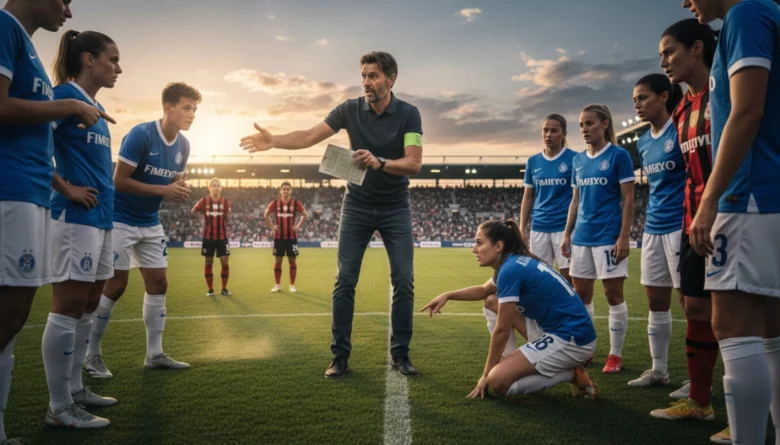
- One-minute huddles: At natural breaks, gather the closest four to five players and deliver a 30–60 second tactical reminder—what pattern to exploit next or which channel to close down.
- Sideline signal vocabulary: Agree on two-word calls and simple hand gestures for common adjustments (e.g., “press now” with a single arm raise). Keep it limited so responses are immediate.
- Post-positional calibrations: After goals or conceded set pieces, lead a 20-second regroup focusing on the immediate tactical fix rather than long critiques.
These habits reduce cognitive load for teammates, turning complex tactical shifts into familiar rituals that can be executed under fatigue and stress.
Tactical Case Studies: How Captains Tilted the Balance
Concrete examples help translate theory into practice. Consider a captain who, mid-game, notices the opposition full-backs drifting high to overload the wings. Instead of waiting for coach instructions, they instruct their central midfielder to hold deeper and signal the wing-back to tuck in—immediately removing the overload and creating a spare man for counter-attack.
In another instance, a captain recognized the team had lost control of tempo after conceding a set piece. They slowed play deliberately—controlling restarts, encouraging lateral passes, and demanding composure from forwards. That five-minute recalibration allowed possession to stabilize and the team to regain territorial advantage.
These snapshots show the common pattern: effective captains diagnose a tactical fault, communicate a narrowly defined fix, and use repeated habits to embed the change. Practice the drills and rituals above and you’ll increase the number of moments where you, as captain, can tilt the balance in your team’s favor.
Tracking and reflecting
Keep a simple captain’s log: note the interventions you make, the immediate outcome, and any teammate feedback. Review those entries with the coach and use video clips to confirm what worked and why. Small, regular reflection sharpens your instincts and turns occasional tactical wins into consistent influence.
Leading Beyond the Plan
Leadership on the pitch is an ongoing experiment. Embrace curiosity, invite feedback, and be willing to try small, controlled changes in matches and training. Your willingness to learn publicly—then adjust quietly—signals to teammates that tactical discipline is a collective pursuit, not just a directive from the touchline.
Build relationships, prioritize clarity, and protect the team’s composure when pressure rises. Over time these habits create a culture where tactical instructions travel faster and stick longer. For practical coaching frameworks and further reading, consult UEFA Coaching Resources.