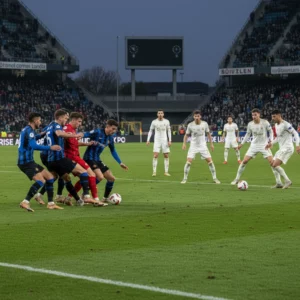

Why some competitions naturally produce more “Both Teams to Score” games
When you look for GG (both teams to score) opportunities, the competition itself matters as much as individual teams. Certain leagues and cups have structural, tactical, and cultural characteristics that encourage open play and more goals, which increases the chance that both sides will find the net. Understanding those underlying reasons helps you focus your research and place smarter GG/NG (no goals for one team) bets.
Key factors that make a competition GG-friendly include playing style norms (attack-minded tactics), defensive quality variation between clubs, fixture congestion that affects team rotation, and weather or pitch conditions that favor attacking play. You’ll also see differences between domestic leagues and knockout cups—single-leg cup ties and later-stage international matches can produce more conservative outcomes, while mid-table league fixtures often encourage experimentation that raises goal potential.
How to use this knowledge in your betting approach
- Prioritize competitions where average goals and BTTS percentages tend to be higher; these give you a statistical edge when odds are fair.
- Combine league-level trends with current team form—two attack-heavy teams in a high-scoring league are more likely to produce GG than the same teams in a defensive league.
- Watch for fixture context: relegation battles and matches with high stakes can suppress scoring; early-season and mid-table games often open up more.
Competitions that commonly favor Both Teams to Score (and why)
While every season shifts slightly, some competitions consistently show higher BTTS rates because of their tactical cultures, disparity between clubs, or standard of defending. Below are leagues and tournament types you should watch when you want GG-style markets.
- Dutch Eredivisie: Historically attack-focused and open, you’ll often see both teams scoring as clubs prioritize forward play and development of attacking talents.
- German Bundesliga: Fast transitions and pressing systems create end-to-end football; the league’s approach tends to produce multiple goals per match.
- Turkish Süper Lig and Portuguese Primeira Liga: These leagues mix technical offense with occasional defensive inconsistency, producing frequent GG results.
- Some Eastern European leagues (e.g., Czech, Polish): Greater variance between top and bottom teams can lead to open matches with goals at both ends.
- Domestic cup early rounds: When top teams field rotated sides against lower-league opponents, you can see more goals and BTTS outcomes than in tightly contested cup finals.
Use these league tendencies as a starting filter, then layer team-specific form, head-to-head history, injury news, and market odds to find value. In the next section, you’ll learn a step-by-step checklist to analyze fixtures for GG/NG value and which stats to prioritize when building your model or bet slate.
A practical pre-match checklist for GG/NG value
Turn the league-level filter into a repeatable routine. Use the following checklist before you place any GG/NG bet—think of it as a short sequence that turns broad intuition into measurable edge.
- Confirm competition context: Is this league or cup one that historically produces BTTS? Are there tactical or scheduling quirks this season (e.g., fixture pile-ups, transfer-window disruptions)?
- Home/away scoring splits: Check both teams’ goals scored and conceded at home vs away. Teams that score regularly both home and away are prime GG candidates.
- Recent form and goal pattern: Look at last 6–10 matches for each side and note how many featured both teams scoring. Trends matter more than single-game anomalies.
- Expected goals (xG) profile: Prioritize sides creating high xG while conceding medium-to-high xG. A team that consistently produces good chances but leaks xG is likelier to be involved in GG games.
- Shot quality and volume: Shots on target per match, shots in the box, and big chances created are better signals than raw shot counts.
- Lineup and rotation risk: Confirm starting XI and bench rotation patterns. Heavy rotation or rested key attackers can swing GG probability drastically.
- Injury/suspension impact: Missing a defensive pillar (CB, DM, goalkeeper) increases GG chances more than missing a fringe attacker usually reduces them.
- Head-to-head tendencies: Some rivalries or tactical matchups consistently produce open games despite form—factor this in as a qualitative override.
- External factors: Weather, pitch quality, travel distances, and late kickoffs can influence scoring—take these into account if they’re extreme.
- Market movement and odds checks: Compare multiple bookmakers and watch early line moves—sharp money toward GG or NG is informative.
Which stats matter most for predicting both teams to score
Not all numbers are equally predictive. Focus on metrics that capture attacking threat and defensive vulnerability rather than vanity stats.
- xG For and Against: The core indicators. High xG for + high xG against = fertile ground for GG.
- Shots on target & big chances: These translate to real scoring opportunity; volume without quality is less useful.
- Conversion rates and goalkeeper save %: Sudden dips or injuries in keepers/systems change outcomes faster than seasonal averages.
- Expected Goals on Target (xGOT)/Shot quality: Helps identify teams relying on low-quality finishes versus sustainable threat.
- BTTS percentage (recent & seasonal): Use a rolling window—seasonal for context, recent form for immediacy.
- PPDA and transition metrics: Teams that press high but leave space behind often feature open matches with both teams scoring.
Pair these quantitative signals with the checklist above and you’ll reduce noise and increase the chance of finding true value GG/NG opportunities rather than chasing patterns that don’t hold up under scrutiny.
How to integrate market odds and size your bets sensibly
Even with a strong read, you still need to beat the market. Translate your model or checklist into a probability, compare it to the implied odds, and act only when there’s a margin.
- Estimate probability: Convert your assessment into a percent chance of GG/NG. If your model says 60% and the market implies 50%, you’ve found value.
- Staking plan: Use flat stakes for new strategies or a percentage/Kelly approach when you have a robust edge—avoid oversizing on a single match.
- Shop for best price: Small odds differences matter on GG markets—use multiple bookmakers or exchanges.
- Avoid emotional hedging: Cash-outs and impulse shifts kill long-term value. Only adjust sizing after clear information changes (lineup news, weather).
With this practical framework—filtering competitions, applying the checklist, prioritizing the right stats, and integrating market discipline—you’ll approach GG/NG bets with a repeatable, evidence-driven process rather than guesswork.
Next steps for applying these GG/NG tips
Turn the framework into a habit: test a small, trackable portfolio of bets, record outcomes, and iterate based on what your data actually shows. Prioritize consistency over short-term hits—small, steady improvements in selection and staking compound far more than chasing one-off predictions.
Keep a simple tracker with competition filters, the checklist items you used, the implied market probability, your estimated probability, and the result. After 50–100 bets you’ll have enough evidence to refine which leagues, metrics, and staking rules work for you. If you need reliable xG and shot-quality data to feed that tracker, consider sources like Understat xG data.
Finally, stay disciplined around bankroll management, market shopping, and information updates (lineups/weather). The edge comes from process control as much as from insight—protect it.
Frequently Asked Questions
Which leagues most consistently produce both teams to score (BTTS) outcomes?
Historically, some Eastern European leagues, the Dutch Eredivisie, and lower-tier divisions in England and Spain show higher BTTS rates due to open styles and defensive inconsistencies. However, seasons change—apply the checklist and rely on recent BTTS percentages and xG profiles rather than league reputation alone.
How far back should I look when measuring recent form for GG/NG bets?
A rolling window of 6–10 matches balances recency with sample size and is usually sufficient to spot meaningful trends. Use season-long stats for context, but weight the most recent matches more heavily—especially if there have been tactical changes or key injuries.
When is it sensible to use a larger stake on a GG/NG selection?
Increase stake size only when multiple independent signals align (strong xG differential, consistent BTTS rate, favourable home/away splits, confirmed lineups, and market value). For systematic confidence, use a percentage/Kelly approach with conservative growth parameters rather than making emotional exceptions.