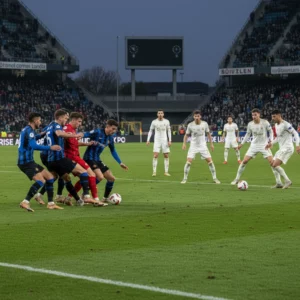

Why pressing deserves your attention when assessing match momentum
You can gain a real edge by understanding how pressing alters possession, chance creation, and defensive vulnerability. Pressing isn’t just an isolated tactic — it’s a series of triggers and responses that create repeatable patterns. When you watch a game with a checklist in mind, you move from guessing to forecasting: you start to predict when a team is likely to win the ball high, when transitions will produce shots, and when a numerical advantage or fatigue will shift probability in the next 5–15 minutes.
Key reasons pressing affects betting value
- You can anticipate short-term swings in expected goals (xG) because sustained presses produce more turnovers in dangerous areas.
- Pressing often forces low percentage passes and rushed clearances that increase set-piece frequency — a valuable angle for corner and card markets.
- Teams that press effectively create distinct time windows where live odds underreact; recognizing those windows gives you entry points for favorable in-play bets.
Recognizing pressing triggers: a practical observational checklist
To act on pressing patterns, you need rapid, repeatable signals that you can spot on the stream or live feed. Use the following checklist to filter noise from meaningful triggers. As you practice, these will become automatic cues that tell you when to tighten your staking or look for specific markets.
Pre-kick and in-play triggers to watch for
- Recent substitution or tactical switch: A new coach instruction or a fresh high-energy forward often precedes an uptick in pressing intensity for 10–20 minutes.
- Opposition goalkeeper distribution: Short goal-kicks and playing from the back invite coordinated presses; look for forwards and midfielders stepping up simultaneously.
- Repeated wide overloads: When full-backs push high and wingers tuck inside, teams can press on the flanks to trap the opponent — this typically leads to crosses, corners, and half-chances.
- Direction of play after a throw-in or corner: Presses initiated immediately after set plays often aim to win second balls; count the number of players committed forward.
- Tempo and pass-type shift: A sudden move from long clearances to quick short passes is a common trigger for the opposing team to start a press.
Immediate map of actionable betting responses
- Spotting a successful high press? Consider small, short-duration stakes on total shots or shots on target markets for the next 10–15 minutes.
- If pressing leads to many throw-ins and corners, the corner market typically offers quicker value than match-winner bets.
- When the press collapses and the counter-attack threat rises, favor fast-goal markets or single-event in-play wagers rather than long-term bets.
With these triggers and quick-response actions forming your foundation, you’ll be ready to quantify pressing intensity and translate observations into concrete staking rules in the next section.

Quantifying pressing intensity: a simple scoring system
To act decisively you need a numeric shorthand that converts visual cues into a reproducible signal. Keep the scoring intentionally coarse — you want speed and consistency, not perfection. Here’s a pragmatic 0–10 framework you can use live or in quick match reviews:
- +2: Coordinated forward line-step up (3+ attackers or midfielders press the goalkeeper/centre-backs)
- +1: Repeated short goalkeeper distributions or playing-from-back sequences
- +1: Full-backs high with inside-forward support creating wide traps
- +1: Fresh energetic sub (forward or wide midfielder) introduced in the last 10 minutes
- +2: Multiple successful turnovers inside the opponent’s half in the last 10 minutes
- +1: Opponent visibly fatigued (loss of shape, slowed reactions, late tackles)
- -2: Press consistently bypassed by accurate long passes or a dominating counter-attack threat
Score interpretation (example thresholds):
- 0–2: Low pressing risk — avoid press-dependent short-term plays.
- 3–5: Moderate press — look for small-stake in-play opportunities (shots/corners) for the next 8–15 minutes.
- 6–10: High-intensity press — higher conviction for short-duration markets and next-event bets; expect elevated xG and set-piece frequency.
Record each scoring episode with time stamps. Over a season you’ll build a library of patterns tied to specific teams, managers, and game states — and that historical layer is where repeatable edges emerge.
Translating the score into staking rules
A tactical scoring system is useful only when paired with disciplined staking. The goal is to capture short-term market inefficiencies while protecting your bankroll against variance. Use a tiered approach linked to the score and market liquidity:
- Base stake (score 3–5): 0.5–1% of bankroll on short-window markets (next 10–15 minutes shots, corners).
- Elevated stake (score 6–7): 1–2% on the same markets; consider larger single-event bets like next goal if odds are generous.
- Maximum press stake (score 8+): 2–3% when multiple triggers align (fresh sub, successful turnovers, opponent fatigue) and liquidity is high.
Practical rules to reduce emotional mistakes:
- Limit exposure to a single match window — cap total in-play allocation per game (for example, 5% of bankroll).
- Prefer markets with short settlement (shots, corners, next 10 minutes) to avoid late-match variance.
- Use partial cash-outs only when the market swings >50% from your entry and the remaining implied value is uncertain.
Market selection and timing: where pressing creates the most consistent value
Pressing impacts some markets more predictably than others. Prioritize these for quicker, repeatable wins:
- Short-interval shots/attempts: High press = more forced turnovers and hurried attempts; odds often lag for the first 8–12 minutes of the sequence.
- Corner markets: Wide pressing that traps teams on the flank converts to corners regularly and is less influenced by a single lucky shot.
- Next-event/next-goal: Use when pressing yields clear territorial dominance; avoid if the opponent remains compact or still poses a counter threat.
- Cards and set-piece markets: Sustained press increases fouls and tactical fouls; this is a supplementary angle when the referee is already card-happy.
Timing is everything: enter early in the press window, size conservatively, and plan exits before the press naturally wanes (typically 10–20 minutes after the trigger). Track outcomes and refine both your scoring weights and staking caps — iterative improvement is the difference between occasional luck and a sustainable in-play strategy.

Calibration and record-keeping
To turn observations into an edge, you need disciplined data collection and regular recalibration. Spend time after matches logging each press episode, the score you assigned, the markets you used, stake sizes, and the outcome. Over weeks this will reveal which teams and referees produce consistent edges and which contexts are noise.
- Record time-stamped press scores and the specific triggers present (substitution, goalkeeper distribution, wide overloads).
- Track market selection and entry/exit times so you can measure hold period performance (10-minute windows are a useful baseline).
- Review performance monthly and adjust scoring weights, stake tiers, and maximum per-game caps based on realized ROI and variance.
Putting it into practice
Start small and treat the first month as an experiment rather than a profit period. Focus on building habits: use the scoring system every match, timestamp trades, and limit in-play exposure. If you want to deepen your tactical read, explore advanced datasets and visualizations from specialist analytics providers to cross-check your on-stream observations — for example, see StatsBomb for press-related metrics and case studies.
With consistent record-keeping and disciplined staking, pressing triggers become more than an interesting observation — they become a repeatable, testable input to your in-play betting process.
Frequently Asked Questions
How often should I apply the 0–10 pressing score during a match?
Use the score each time you notice a meaningful tactical change (substitution, switch to short GK distribution, a wave of turnovers). Practically, this will be several times per half in active games; timestamp each score so you can link it to market entries and outcomes.
Which markets should I avoid even when the press score is high?
Avoid long-settlement markets that are exposed to late-match variance (match-winner, full-game handicaps) unless you have overwhelming contextual reasons. Also be cautious with next-goal bets if the opponent retains a potent counter-attack or the referee is likely to stop play frequently.
Can I combine pressing scores with statistical models?
Yes. Pressing scores are a fast qualitative layer you can feed into quantitative models (e.g., weighting recent turnovers or short-pass sequences into expected goals projections). Use them as short-term modifiers rather than replacing core model inputs, and validate any combined approach on historical in-play windows.