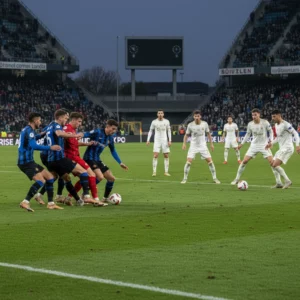

How pressing systems create betting signals you can read
You may already notice teams that press high or sit deep repeatedly force certain patterns: turnovers in specific zones, quick transitions, or slow build-ups. Understanding those patterns gives you a practical edge when you place pre-match or in-play bets. This section explains the core cause-and-effect chain you’ll use for most strategies: the type of press → the game moments it produces → the market signals you can target.
Press types and the predictable moments they produce
- High press: Forces opponents into long clearances or mistakes near their box. Look for increased shots from set-pieces and regains in advanced areas.
- Mid-block: Compresses space around the middle third, often producing turnovers that lead to counter-attacks or sustained possession sequences.
- Low block: Invites long possession from the opponent and often yields fewer open-play chances but more set-piece opportunities for the pressing team.
When you connect these tendencies with market dynamics — for example, that a high-pressing team often wins corners or that mid-block teams create sudden counters — you can start to map which betting markets will most frequently offer value.
Translating pressing patterns into your first betting strategies
Start by narrowing the universe: choose leagues and teams where pressing tendencies are consistent and well-documented. You want repetition. Once you’ve identified targets, apply these early strategies that rely on pressing systems as the signal source.
Strategy 1 — Pre-match corners and set-piece bias
If a team has a consistent high press and high turnover rate in the attacking third, they will usually generate more corners and set-piece situations. You can evaluate historical corner rates and favor markets like “over corners” or “team corners” when the numbers align. Use head-to-head and recent form to confirm the trend.
Strategy 2 — In-play value on early cards and fouls
A high press often forces rushed tackles and tactical fouls near the halfway line. Bettors who watch early game structure can take in-play markets for cards or team fouls before odds adjust to the game’s tempo. Watch the referee’s strictness in the opening minutes; if they penalize the press early, value emerges for additional bookings.
Strategy 3 — Counter-attack edge: back the underdog on transitions
When a dominant team presses high against an opponent that is comfortable in transition, the underdog can be dangerous on counters. You can find value by backing the underdog in markets like “anytime scorer” from a specific forward or “away team to score” when transition probability is high and pre-match odds don’t fully reflect that threat.
These first three strategies build on observable, repeatable outcomes of pressing systems. In the next section you’ll get practical checklists, example matches, and staking rules to apply the remaining pressing-based betting strategies with confidence.

Strategy 4 — Next-goal and momentum markets: exploiting pressing bursts
When a team’s press forces a turnover high up the pitch, the most reliable short-term market is “next goal” or “next X minutes”. These moments often produce immediate shots, set-pieces, or a scramble that yields a goal inside a short window. The value comes from acting before the market fully re-prices the sudden increase in scoring probability.
- How to spot the trigger: a successful press regains the ball inside the opponent’s half, or the opponent is pinned back for multiple possessions. Live indicators include an immediate corner or a sequence of shots from the pressing team.
- Markets to use: next-goal, next 10/15 minutes total goals, team to score next, or “goal in next 5-10 minutes” if your book offers micro-markets.
- Execution tip: place the bet within a single possession after the turnover. Odds move quickly; patience loses value.
- Risk control: if the press fizzles (opponent clears comfortably or referee halts play), cash-out early where possible or keep stakes small to limit variance.
Example scenario: a high-press away side regains possession repeatedly in the final third during the 30–40 minute window against a low-block team — a prime moment to snap up “next-goal” value before the market tightens.
Strategy 5 — Shot- and attack-based markets: turning pressing intensity into over bets
Pressing systems often translate into elevated shot volumes and higher-quality chances from set-pieces and rebounds. That predictable uptick is exploitable in shots-on-target, total shots, and “team to have more shots” markets, both pre-match and in-play.
- Pre-match edge: back over shot totals when a known high-press team meets a side that plays out from the back (higher likelihood of turnovers and speculative long-range attempts).
- In-play plays: after a series of sustained attacks or multiple corners, push for immediate overs in the next 10–15 minutes, or bet the pressing team to accumulate more shots in the half.
- Data sources: live shot maps and event feeds. If you see a cluster of attempts from set-pieces and rebounds, the “over” is often underpriced for a short window.
- Beware: weather, pitch quality, or substitutions that change pressing intensity can abruptly remove the edge—monitor these closely.
Practical checklist and staking rules for pressing-based bets
Turning the strategies above into a repeatable process requires a compact checklist and conservative staking. Use this before you place any pre-match or in-play pressing bet.
- Pre-match checklist: confirm press type (high/mid/low), recent turnover rate in attacking third, opponent’s vulnerability to counters, referee carding style, and squad fitness (key pressers fit?).
- In-play checklist (quick): did the press succeed in the last 5 minutes? Has possession been regained in the attacking third? Are corners/shot volume rising? Any tactical substitutions?
- Staking rules: use flat stakes for frequent in-play plays (e.g., 0.5–1% bankroll). For pre-match edges with quantified edge, consider a fractional Kelly (10–20% of Kelly fraction). Set a max exposure per match (2–5% of bankroll) and a daily loss limit to prevent tilt.
- Record-keeping: log the pressing signal, market, stake, outcome, and reasoning. Over time this clarifies which press types and leagues produce the most consistent edges.
With these advanced play types and a disciplined staking plan, you can systematically translate press-driven game moments into repeatable betting opportunities while managing downside risk.
Before you place your first press-based wager, run a short pre-match routine: confirm the press type, check recent turnover and corner rates, verify referee and fitness notes, and set a clear stake and exit point. In-play, prioritize quick decisions when a pressing trigger appears and keep stakes conservative until you build a documented edge. Small, consistent tests and accurate logging are the fastest way to turn the strategies above into a dependable playbook.

Putting the pressing edge into practice
Treat pressing-based betting as an operational skill, not a tip sheet. Focus on repetition, disciplined staking, and continuous learning — review your log after every session and adjust which leagues, teams, and markets produce the most reliable signals. If you need richer event feeds or heatmaps to validate press patterns, consider trusted data sources like WhoScored to strengthen your scouting and live reads. Above all, stay patient: edges from pressing systems compound only when you protect your bankroll and iterate on real results.
Frequently Asked Questions
How can I identify a team’s press type before a match?
Look at tactical reports, recent heatmaps, and turnovers per 90 from the last 6–10 matches. Teams that consistently win the ball high, have high PPDA (low opponents’ passes per defensive action accepted in that metric), or frequently force corners in the attacking third are likely high pressers. Pre-match lineups also matter: the presence of energetic wingbacks or a mobile front three often signals higher pressing intent.
What staking approach is safest for in-play pressing bets?
Use small, flat stakes for frequent in-play opportunities (0.5–1% of your bankroll per play) to limit variance and preserve capital while you test. For quantified pre-match edges, a fractional Kelly (10–20% of full Kelly) can be applied. Always cap exposure per match (suggested 2–5% of bankroll) and enforce a daily loss limit to avoid tilt.
Which betting markets respond best to pressing signals?
Commonly profitable markets include corners and set-piece counts, shots/shot-on-target totals, next-goal or short-time-frame goal markets, and team fouls/cards when a press forces rushed tackles. The best market depends on the press type: high press → corners and cards; mid-block → quick counters and next-goal windows; low block → set-piece opportunities for the pressing team.