Why your role as captain shapes team performance
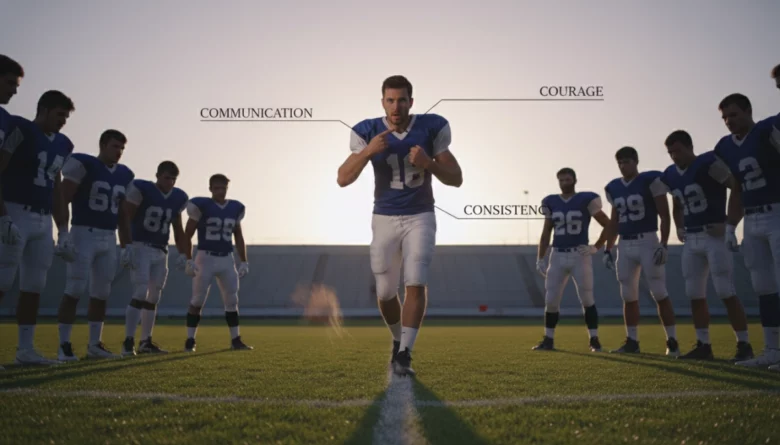
When you wear the armband, your influence goes beyond tactics and set pieces. A captain bridges the coach’s plan and the players’ execution, sets standards for behavior, and becomes the emotional barometer of the group. In football, three qualities consistently separate effective captains from the rest: communication, courage, and consistency. You can learn and strengthen each trait so your presence improves cohesion, decision-making, and resilience under pressure.
Think of these qualities as interdependent: clear communication amplifies courage because your teammates know they’re backed; courage is more credible when you consistently act on your words. This part introduces what each quality looks like in practical terms and how you can begin applying them in training and matches.
How to communicate so your team listens and acts
Speak concisely, listen actively
Communication is both verbal and non-verbal. You must deliver concise, actionable instructions during dynamic moments, but also make time to listen during breaks and team meetings. When you ask questions and reflect what you hear, teammates feel respected and are more likely to buy into tactical adjustments or behavioral standards.
- Use short, specific phrases on the field — call names, positions, and simple commands (e.g., “Left! Press!” or “Drop two”).
- Model active listening off the ball: repeat concerns, acknowledge effort, and follow up with solutions.
- Match non-verbal cues to your words: consistent eye contact, gesture directionally, and use posture to show presence rather than aggression.
Build trust through transparency
Being honest about team issues and your expectations creates credibility. You don’t need to always have the answer; admitting uncertainty and committing to find solutions often builds more trust than pretending to know everything. When you communicate with transparency, you create a climate where mistakes become learning moments instead of morale sinks.
Demonstrating courage and sustaining consistent standards
Show courage when the stakes are high
Courage in football isn’t just about physical bravery; it’s about making tough decisions, taking responsibility for errors, and stepping up to take the decisive penalty or defend a teammate under scrutiny. Your willingness to act under pressure signals to teammates that risk is sometimes necessary for progress.
- Lead by example in high-pressure actions (pressing, tracking back, or taking responsibility in team talks).
- Recover publicly from mistakes — show how you analyze and adjust rather than hide or shift blame.
Create predictable standards through consistency
Consistency is the glue that turns one-off acts of courage into a team identity. You set predictable routines for warm-ups, punctuality, training intensity, and how conflicts are handled. When your behaviors are steady, teammates understand the boundaries and expectations, which reduces friction and improves focus.
- Establish repeatable rituals before matches and after training to reinforce professionalism.
- Hold yourself and others to the same standards; even small lapses matter because they change team norms.
With these foundations in place, you can begin to practice specific drills, feedback methods, and in-game routines that make communication, courage, and consistency automatic — the next section will show practical exercises and match scenarios you can implement immediately.
Training drills that make communication and courage automatic
Turn leadership into muscle memory by embedding short, repeatable drills into regular sessions. Make the captain responsible for running them so leadership becomes a habit, not a role you only adopt on matchday.
- Captain’s Rondo (5–8 minutes): A standard rondo where the captain calls one touch, two touch, or directional cues. The captain must change the instruction mid-rally and force teammates to adapt—this builds concise on-field instruction and quick listening.
- Pressure Relay (3 x 6 minutes): Split into small teams. Each team must complete a sequence of passes under escalating pressure while the captain directs pressing triggers and rotations. Add consequences for poor communication (extra sprint) to reinforce accountability.
- Set-piece Leadership Reps: Have the captain call defensive and offensive markings for corners/free-kicks. Rotate responsibility for shouting adjustments so captains practise clear, authoritative commands under crowd/noise simulations.
- Mistake Recovery Drill: Simulate turnovers: when a defensive error occurs, reset immediately under the captain’s instruction. The captain leads a short, structured debrief—what went wrong, what we do next—turning errors into fast learning moments.
- Pressure Penalty/Decision Session: Run penalty scenarios and leadership decisions (who takes a penalty, who calms an upset teammate). The captain practices taking responsibility and communicating choices publicly.
Match routines: scripts, signals, and substitution leadership
Predefined routines reduce indecision in chaos. Create short verbal scripts and hand signals for common moments so the whole team reacts as one when the game speeds up.
- Pre-kickoff checklist (60 seconds): Captain-led warm-up wrap: confirm formation, set-piece assignments, focus phrase (e.g., “stay compact”), and who marks key opponents.
- Defensive line call: Use a two-word script for alignment: “Hold—flat” or “Step—fast.” Consistency makes split-second cohesion possible.
- Calm after conceding: Captain goes to the nearest teammate, uses a fixed three-line script: acknowledge, reset, refocus (“OK — breathe — press now”). Repeating the same approach prevents spirals.
- Substitution handover: Five quick points from captain to incoming player: position, immediate task, opponent to watch, tempo instruction, and encouragement. Keep it under 15 seconds.
- Referee interaction: Train respectful, brief language (e.g., “Ref, can you check that? Thanks.”) and non-confrontational body language. The captain should be the consistent voice to manage refereeing relations.
Building leaders: feedback loops and culture maintenance
Leadership multiplies when captains develop others. Use structured feedback and small responsibilities to grow a leadership group rather than a single figurehead.
- One-on-one check-ins (10–15 minutes weekly): Captain holds short conversations focusing on support and clear, solution-oriented feedback rather than criticism.
- SBI feedback method: Situation — Behavior — Impact. Teach captains to give feedback that’s specific and actionable (“In the last set-piece, you left the far post unmarked; it led to a shot on goal. Next time, take the back post”).
- Leadership rotation: Rotate small duties (warm-up lead, media line, captaining segments of training) to build accountability across the squad.
- Celebrate examples: Publicly acknowledge teammates who display courage or consistency. Naming and praising specific actions reinforces the desired culture.
These drills, scripts, and systems make the captain’s qualities reproducible across the squad — forming the practical bridge from intention to impact on training ground and matchday alike.
Measuring progress and keeping momentum
Track simple, observable signs that leadership is landing: fewer reactive mistakes, quicker defensive realignment, clearer set-piece organisation, and more teammates stepping into responsibility. Use short post-training surveys or a three-question check-in (“Did the captain help today? What worked? What one thing to improve?”) to keep feedback looped and actionable. Small, frequent measures beat big, infrequent judgments.
First steps to put into practice this week
- Pick one drill (e.g., Captain’s Rondo) and lead it every session for a week.
- Create and use one match script (calm after conceding or substitution handover) until it becomes automatic.
- Schedule one 10-minute one-on-one to practice SBI feedback and listening skills.
- Note one standard you will never compromise and model it visibly (punctuality, warm-up routine, or respectful referee interaction).
Lead the way — one decision at a time
Being captain is less about a single grand gesture and more about the small, repeatable choices you make every day. Choose clarity when you speak, choose accountability when things go wrong, and choose the predictable routines that let everyone perform without guessing. Start with one habit this week, measure it, and build from there — leadership grows faster when it’s practiced publicly and improved deliberately. For additional templates and ideas to structure your captaincy, see FIFA leadership resources.