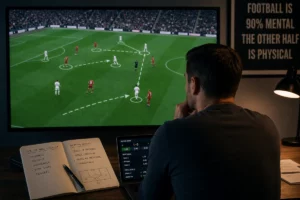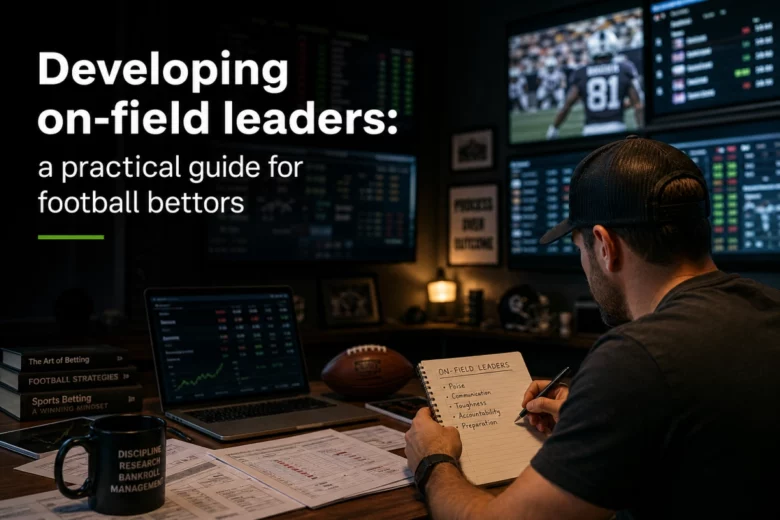
Why developing leaders in football should matter to bettors
On-field leadership changes the way a team performs under pressure and can subtly shift betting markets. Understanding how clubs and coaches promote captains, use academy graduates, set up mentorships and assign tactical leadership roles helps bettors read form and market value more accurately. This guide explains the common leadership types, the observable signs that a player is becoming a leader, and early ways those signs can influence pre-match odds, live markets and markets such as both teams to score (BTTS), over/under goals and handicaps.
Leadership types clubs create and what to watch for
Clubs develop leaders through deliberate pathways; recognising these types helps bettors spot structural changes rather than one-off performances.
- Club captain / formal leader: officially chosen, often a senior player who influences selection, press interactions and on-field discipline.
- Emerging academy leader: a promoted academy graduate who earns responsibility gradually — influence may show in communication and confidence rather than headline stats.
- Tactical leader (on-field coach): players tasked with organising pressing, defensive shape or set-piece routines — usually midfielders or central defenders.
- Mentor veterans: experienced pros who guide younger teammates off the ball, helping maintain focus during congested fixtures.
Observable indicators that a player is becoming a team leader
These are practical, trackable signs bettors can monitor across matches, training reports and media coverage:
- Consistent starting XI inclusion and increased minutes in key fixtures (not just rotation games).
- Visible in-game communication: directing teammates, organising defensive lines, calming play after setbacks.
- Responsibility for set-pieces, penalties or taking the lead in high-pressure moments.
- Coach references in interviews or social media highlighting influence or leadership role.
- Stat changes aligned with leadership: improved team defensive record when the player is present, fewer conceded soft goals, or better late-game recovery rates.
- Peer reactions: younger players deferring to them, or public mentoring evidence.
How early leadership signals can change market selection and stake sizing
When leadership signs appear, they can impact match dynamics that bettors can exploit — cautiously. The following explains common betting markets and practical adjustments bettors might consider while recognising the limits and risks.
- Match result / Double chance / Draw no bet: A newly established leader can increase team resilience. If a coach’s captain is confirmed to play, the implied probability of avoiding defeat may rise; bettors sometimes shift from backing straight win to reduced-risk markets like double chance or draw no bet with smaller stakes.
- BTTS (both teams to score) & Over/Under goals: Leaders who organise defence can reduce expected goals conceded, making under markets relatively more attractive. Conversely, attacking leaders taking set-pieces can increase BTTS or over markets.
- Asian handicap & handicaps: Leadership that improves late-game control can justify smaller handicap gaps. Bettors may favour handicaps with lower variance when leadership reduces collapse risk.
- Live betting: In-play, visible leadership (calming teammates, tactical shifts) can influence live odds quickly. Stake sizing should be conservative; markets move fast and leadership is one of several inputs.
Any adjustment in market selection or stake sizing must include clear limits: avoid over-weighting a single qualitative sign, account for injuries, opposition quality and referee tendencies, and always maintain bankroll rules. Responsible gambling reminder: set a budget, use affordable stakes and never chase losses.
Next, the article will provide a structured checklist to track leadership indicators across matches, explain how to quantify their impact with simple statistics, and show step-by-step examples of market adjustments and risk management.
A practical checklist to track leadership indicators (score and record)
Turn the qualitative signs into a repeatable checklist you can apply before matches and during live betting. Score each item to create a quick “leadership confidence” metric:
- Consistent starter & high minutes in key games — 2 points
- Visible on-field communication/organisation (post-match clips or live observation) — 2 points
- Primary responsibility for set-pieces or penalties — 2 points
- Coach/club media explicitly praising influence or naming them captain/vice-captain — 2 points
- Improved team defensive/late-game stats with player present (see next section) — 1 point
- Young players visibly deferencing/mentoring evidence in reports — 1 point
Score interpretation (quick reference):
- 8–10: Clear, established leader — treat leadership as a strong factor in market decisions.
- 4–7: Emerging leader — worth factoring in alongside other metrics; increase caution.
- 0–3: No leadership signal — don’t bias market selection on leadership alone.
Keep a simple log: date, opponent strength, leadership score, venue, outcome and any notable in-game leadership moments. Over time this builds context that separates one-off narratives from durable leadership effects.
Quantifying leadership: simple stats bettors can use
Complement your checklist with basic numeric checks that show a player’s measurable impact. Focus on per-90 or match-level comparisons to control for minutes:
- Goals conceded per 90 (with vs without player) — look for consistent drops across a sample (e.g., 0.4+ goal improvement is meaningful).
- xG conceded per 90 or shots on target allowed — more robust than raw goals in small samples.
- Late-game resilience metrics: points gained from losing positions or goals conceded after 75’. A leader who reduces late collapses changes handicap risk.
- Set-piece conversion/creation rate when the player takes deliveries or penalties — relevant to BTTS/over markets.
Example micro-calculation: if a team concedes 1.5 xG/90 without the player and 0.9 xG/90 with them, that’s a 0.6 xG/90 improvement — roughly 0.2–0.4 goals per match in real terms. If market prices ignore this, the edge may appear in under markets, DNB or smaller handicap gaps.
Step-by-step examples for market selection, stake sizing and limitations
Example 1 — pre-match: an emerging captain scores 8/10 on your checklist and team defensive metrics improve with them. Market: home win at 2.20 (implied 45.5%). Action: consider reducing downside risk (draw no bet) or backing home win with a moderately increased stake (e.g., raise unit from 1% to 1.2% of bankroll if you use fixed units) only if your own fair-probability estimate exceeds the market. Use conservative fractional Kelly if you prefer mathematical sizing and cap exposure.
Example 2 — live: midgame, you see a centre-back calming play, organising shape and opponent pressure subsiding. If your live read + stats suggest BTTS chance has dropped, move from a speculative Over 2.5 lay to a safer Under 3.5 or target Asian -0.25 liability reductions—small stakes only; live markets move fast and sample is tiny.
Limitations and risks: small sample sizes, tactical changes, opponent strength, referee/cards, injuries and media narratives can all mislead. Never overweight a single qualitative sign; leadership is one input among many. Responsible gambling reminder: predefine stakes, stick to bankroll rules, and treat leadership signals as complementary information — not a guaranteed edge.
Putting leadership insight into action
Leadership on the pitch is a gradual, observable factor that can sharpen your reading of markets — but only when treated with discipline. Use the signals and checks you’ve learned as part of a repeatable routine, keep exposure modest while you test hypotheses, and let evidence from logs and simple stats guide adjustments rather than narrative alone.
Quick action checklist
- Log leadership scores alongside outcomes for a rolling sample of matches (avoid conclusions from one or two games).
- Combine checklist signals with the simple stats you track (with/without comparisons) before changing market selection or stake size.
- When you act on a leadership read, choose lower-variance markets first (DNB, small handicaps, adjusted BTTS/over-under) and use fractional sizing.
- Test live reads cautiously: limit stakes, verify the tactical change is sustained, and watch how market liquidity reacts before enlarging positions.
- Review decisions periodically: did leadership-informed bets perform better than baseline? Adjust your checklist weights accordingly.
Final responsible betting note
Apply these ideas within firm bankroll rules, pre-set stake plans and self-imposed limits. Leadership is an additional lens — not a certainty. If betting stops being enjoyable, causes stress, or you struggle to stay within limits, seek support from local gambling-help resources and consider taking a break.