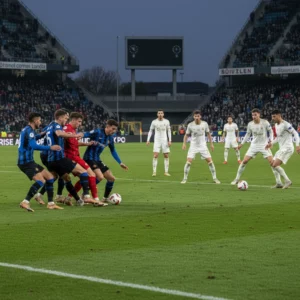

How pressing systems shape the tempo you should expect
You often hear commentators say a team “presses high” or “sits deep,” but as a bettor you need to translate that phrasing into actionable expectations about tempo. Pressing systems determine how often possession changes, how quickly transitions happen, and where the ball is likely to be played. When you understand the mechanics behind a press, you can predict spikes in shots, corners, and turnovers — events that move betting lines in-play and create value before kick-off.
Why press intensity maps to game rhythm
Think of pressing as a force that accelerates or decelerates a match. A high, aggressive press shortens the time between turnovers and often increases the number of scoring opportunities because opponents are rushed into mistakes in dangerous areas. Conversely, a deep block tends to lengthen possession sequences and lower the raw tempo, reducing shot frequency but possibly increasing low-variance outcomes like unders or draw/no-score markets. You’ll get an edge if you match your market selection to the expected rhythm driven by the press.
Spotting pressing styles quickly and what they mean for betting
You don’t need complex models to start exploiting pressing systems — you need pattern recognition. In pre-match research and early minutes of a game, look for structural cues that reveal a team’s pressing identity. Those cues point you toward the bet types that are most likely to yield value.
Common pressing styles and immediate betting implications
- High press / gegenpress: Frequent turnovers high up the pitch, likely more shots, corners and goals. Consider backing over markets, both teams to score, or early in-play shots markets.
- Mid-block: Balanced intensity with periods of control and sudden pressing bursts. This style can create mixed signals — look for value in half-time goals markets or Asian handicaps depending on opponent quality.
- Low block / deep defend: Slower tempo, fewer high-quality chances. Unders, clean-sheet props for strong defensive teams, and single-goal handicaps are common judicious plays here.
- Situational press: Some teams press only in certain match states (e.g., when behind). Track in-game context; late-match presses often inflate corner and shot counts and can be exploited with live markets.
Combine stylistic recognition with match context (injuries, travel, fixture congestion) and you’ll refine which markets move most reliably. For example, two aggressive pressing teams facing off usually produce higher shot and corner volumes than their season averages, making pre-match over-lines or early in-play overs attractive.
Next, you’ll learn which data points and live-tracking signals best quantify pressing intensity and how to convert those metrics into concrete betting angles.

Quantifying the press: the metrics that matter
To move from gut-feel into repeatable edges you need a short list of reliable metrics that map directly onto pressing behavior. Start with PPDA (passes per defensive action) — it’s the clearest shorthand for intensity. Lower PPDA = more pressure; teams consistently below the league median are the ones most likely to force quick turnovers and spike shot/ corner counts. Complement PPDA with these second-order measures: pressures (or pressures per 90), counter-press recoveries in the opponent’s half, and recoveries in the final third. Those last two tell you not just that a team presses, but that it presses where it matters.
Tracking data brings extra nuance. Defensive line height and compactness metrics help you distinguish between teams that press high and those that press mid. Pass-length distributions and long-ball frequency reveal whether turnovers become instant chances or simply relieve pressure. For example, a team with low PPDA but high long-ball rate tends to create chaotic transitions with sporadic shots rather than a steady stream of high-quality chances — this changes your preference between simple over-goals and prop markets like “first shot on target” or “corners in first 20 minutes.”
Finally, always layer in contextual filters: recent substitutions, fixture congestion, and travel all suppress pressing intensity. Measure form over 5–10 matches rather than a season aggregate; pressing is a coach-driven protocol that can swing quickly with a tactical tweak. Where possible use rolling averages for PPDA and recoveries to capture current tactical intent rather than historical identity.
From metric to market: concrete betting angles and timing
Now convert those signals into bets. The simplest, high-probability angles:
– Pre-match overs: If both teams have low PPDA, high final-third recoveries and similar shot-creation-per-turnover rates, the pre-match over line (total goals/shots) will often be underpriced. Look for markets where bookmakers haven’t fully adjusted for both sides’ pressing intensity — especially in leagues where pressing is less common.
– Early in-play overs / shots markets: High-pressure teams typically force quick, clustered events. Back overs in the first 20–30 minutes or trade shot-count handicaps when early possessions and recoveries in the opponent’s half exceed their averages by a clear margin.
– Corner markets: Press-induced turnover chains ending with aimless clearances produce corners. If regains in the final third are elevated and opponent clearances per defensive action are high, favor corner overs or first-half corner props.
– BTTS and first-half goals: When one side presses situationally (only when behind) and the other presses consistently, expect volatility when the situational press is triggered — back BTTS or first-half goal markets when match state or early scorelines suggest a tactical switch.
Timing matters more than stake size. Use small pre-match stakes to exploit structural mismatches and scale into live markets when early signals confirm intensity: sustained low PPDA in the opening minutes, a high share of possessions ending in opponent half recoveries, or visible drops in opponent pass completion under pressure. Conversely, flatten exposure if a team’s pressing intensity falls (e.g., after an early yellow, injury, or obvious fatigue).
Risk-control pointers: require a minimum sample (3–5 matches) for any team-level metric, and always cross-check with video or live commentary for context — a low PPDA against poor opposition is not the same as against elite ball-retention teams. Finally, track your own expected value by tagging trades to metric triggers so you can iterate which signals are genuinely predictive in the leagues you trade.

Putting pressing systems into play
Start small and iterate. Use the metric triggers you’ve identified to place low-stakes pre-match bets, then scale into live markets only when early-game signals confirm the expected pressing behaviour. Keep a running log of the triggers that preceded profitable outcomes and the ones that didn’t — that discipline turns anecdote into an evidence-based edge.
- Test one angle at a time (e.g., first-20-minute overs) so you can link results to specific metrics.
- Watch at least a few full matches of any team before relying on its recorded PPDA or recovery numbers — tactical tweaks happen and short video review beats raw numbers alone.
- Use reputable data sources for your research and cross-check values before committing stake; services like FBref are a useful starting point for match and player stats.
- Respect variance: even high-probability pressing signals will fail in individual matches. Manage stake size and treat your system as a long-run process.
Frequently Asked Questions
How quickly should I update pressing metrics for a team?
Use rolling averages over the last 3–10 matches depending on sample noise and recent tactical continuity. Shorter windows capture tactical shifts faster; longer windows reduce volatility. Always combine numeric updates with at least a quick tactical check (line-up, recent substitutions, manager comments).
Can I use pressing signals across all leagues and levels?
Yes, but adjust expectations. Pressing prevalence and its effectiveness vary by league quality, pitch conditions, and referee style. Lower leagues often have more chaotic long-ball responses to pressure, which changes the best markets to target. Back-test your signals for each league before scaling stakes.
What live cues are most reliable for confirming a pre-match pressing read?
Early low PPDA in the opening 10–20 minutes, a high share of recoveries in the opponent’s half, recurring forced opponent long clearances, and visible sustained defensive line height are reliable live confirmations. If multiple cues align within the first 15–25 minutes, it’s generally a strong signal to scale into relevant in-play markets.