Why leadership matters for every player on the pitch
You might think leadership belongs only to captains, but in modern football every player shapes how a team performs. Leadership influences tactics, team morale, response to setbacks, and the ability to seize moments in tight games. When you take responsibility for communication, positioning, and attitude, you reduce mistakes, raise standards, and create a culture where others feel empowered to contribute.
On matchday, leadership shows up as clear, calm instructions, quick decisions when plans break down, and visible composure under pressure. Off the pitch, it’s about preparation, accountability, and how you respond to feedback. Developing these skills increases your value to coaches and teammates and helps you transition into mentoring or formal leadership roles later in your career.
Key leadership traits you can practice from training to matchday
Leadership is a set of learnable behaviors rather than an innate trait. You can cultivate the following competencies through focused practice, reflection, and feedback. Start by identifying which areas feel natural to you and which require deliberate effort.
- Communication: You must convey simple, actionable information quickly—both verbally and non-verbally. Clear calls, short instructions, and confirming defensive shape prevent confusion when the game speeds up.
- Decision-making: Leaders make timely choices under pressure. Practice scanning, weighing options, and committing to a decision so you avoid hesitation that creates vulnerability.
- Emotional control: Your reactions set the emotional tone. Stay composed to help teammates recover from mistakes instead of escalating tension.
- Accountability: Leaders own errors and model improvement. Accept critique, take corrective action, and encourage others to do the same.
- Situational awareness: Reading the flow of play, anticipating opponents’ moves, and recognizing momentum shifts lets you influence outcomes strategically.
- Motivation and influence: You can lift standards by setting examples in work rate, preparation, and resilience—actions often speak louder than pep talks.
How to prioritize which skills to develop first
Begin with communication and accountability: they produce immediate benefits and are relatively straightforward to practice. Work on decision-making next by simplifying choices into dependable patterns—recognize triggers for high-percentage options and rehearse them in training. Emotional control and influence are refined over longer periods through reflection and deliberate practice, including role-playing and post-match review sessions.
As you build these skills, involve coaches and teammates in your development plan. Ask for specific feedback after training drills and matches, set measurable goals (for example, fewer miscommunications or quicker decision times), and track progress. This structured approach converts intent into reliable leadership behavior.
Next, you’ll look at concrete on-pitch drills, coach-led exercises, and off-pitch routines that accelerate your growth as a football leader and show measurable improvements in team performance.
On-pitch drills that train leadership in game-like moments
Drills should force leaders to make fast choices, direct teammates, and recover control when situations change. Use short, repeatable exercises with clear leadership objectives so progress is measurable.
- Communication rondo (10–12 minutes): 6v2 or 8v2 rondo where two inside players are “silent” defenders who cannot speak. The surrounding players must call for the ball, confirm passes, and direct movement. Objective: increase audible, concise calls. Measure success by counting successful pass chains of 8+ and tracking the number of verbal calls heard per minute.
- Organizer drill: defensive line management (15–20 minutes): Set up a 30x25m zone with attackers probing and defenders maintaining shape. Rotate a “line leader” role—one defender is responsible for calls (step, shift, hold). Add a time pressure element where attackers get a point if they break the line within 8 seconds. Objective: improve spatial commands and pre-emptive communication. Metric: number of successful holds and defensive breakdowns per session.
- Transition captain drill (12–15 minutes): 7v7 with small goals. When a turnover happens, the nearest player becomes the “transition captain” who must organize the counter-press or quick restart (directing who presses, who covers passing lanes). Rotate captains every turnover. Objective: train rapid decision-making and directive leadership. Measure decision time from turnover to first command and number of successful transitions resulting from the captain’s instructions.
- Set-piece leadership rotation (20–30 minutes): Practice defensive and offensive set pieces, rotating a different leader for each repetition who calls marking assignments, wall position, or runs. Objective: increase clarity on responsibilities and calm execution under pressure. Track outcomes such as conceded goals from set pieces and successful clearances or scoring chances.
Coach-led exercises and feedback loops to accelerate growth
Coaches shape leadership by creating constraints, giving real-time feedback, and tracking behavioral metrics. Structured sessions make leadership development objective and repeatable.
- Micro-objective coaching: Before drills, set one leadership KPI for a player (e.g., “make 5 clear defensive calls” or “organize two switches in possession”). Coach records performance and provides immediate, specific feedback after each rep.
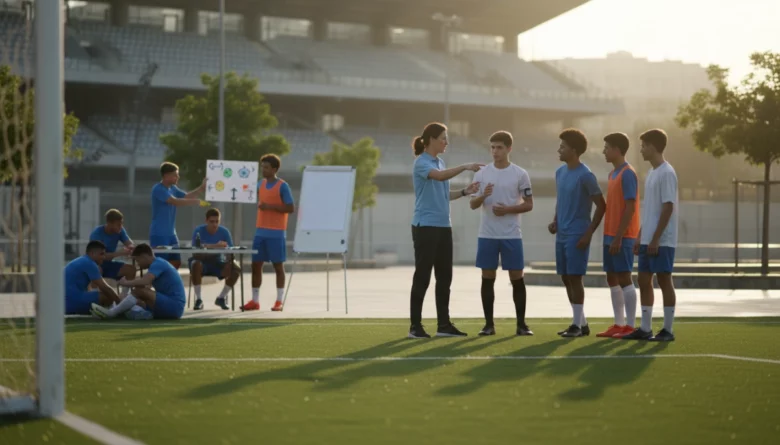
- Live-capture feedback: Use a coach with a clipboard or tablet to note leadership actions during small-sided games (calls made, corrective instructions, calming gestures). Review clips with the team and highlight examples—what worked, what could be clearer. Tangible clips make abstract behavior concrete.
- Peer coaching sessions: Pair players to observe and give feedback on leadership during practice. Structured prompts (what did the leader do well, one suggested improvement) build mutual accountability and normalize leadership critique.
Off-pitch routines that embed leadership into daily habits
Leadership thrives on preparation and reflection. Off-pitch routines turn intention into habit and provide measurable improvement markers.
- Pre-match leadership checklist: A short, repeatable routine (set-piece roles clarified, one-minute captain brief, breathing/visualization) that reduces uncertainty and centers leaders’ focus. Monitor adherence and note changes in pre-game calm and clarity.
- Weekly leadership huddle and action log: 15-minute team meeting to identify one leadership focus for the week and individual micro-goals. Keep a simple log (goal, action taken, result) to review progress fortnightly.
- Video review with leadership lens: Clip 3–5 instances per match highlighting strong or weak leadership moments. Discuss alternatives and assign specific actions for the next training week. Measurable outcomes include fewer repeated leadership errors and improved response times in similar situations.
- Mentoring pairs and role modeling: Pair younger players with experienced teammates for weekly check-ins on attitude, preparation, and decision-making. Track mentee improvements in confidence, communication frequency, and on-pitch responsibilities.
Leading beyond the final whistle
Leadership on the pitch is a habit you build day by day. Keep experimenting with small changes, invite honest feedback, and treat each session and match as an opportunity to practice one specific behavior. Over time those small, consistent choices become the culture your team expects and the reputation you carry as a player and a person.
Practical next steps
- Pick one leadership behavior to focus on this week (e.g., clear defensive calls, calm resets after errors) and log outcomes after each session.
- Ask a coach or teammate for a micro-objective and one piece of immediate feedback after drills or games.
- Rotate leadership roles in training so different players experience directing, organizing, and calming the group under pressure.
- Review one short clip from each match with a leadership lens and set one small action for the next week.
- Pair with a mentor or peer for fortnightly check-ins that track progress and keep accountability real.
If you want structured coaching materials and session ideas to support these steps, explore FIFA technical resources for templates and exercises coaches use worldwide.