Mastering Space: Why off-the-ball movement wins matches
Off-the-ball movement is the invisible engine of effective team play. When you move intelligently without the ball you create passing lanes, drag markers out of position, and offer quality receiving options for teammates. Coaches measure this through metrics like touches, progressive passes received, successful runs behind the line, and support angles—but you can feel the difference: better flow, fewer turnovers, and more goal-scoring opportunities.
Developing this skill set requires practicing decision-making, timing, and technique in training conditions that mirror match pressure. You’ll be training your body to occupy space and your brain to read cues from opponents and teammates so that your runs are purposeful rather than random. In the following sections you’ll learn the core principles to focus on and the first set of drills that build reliable positioning habits.
Core positioning principles to practice every session
- Awareness: Scan before and after passes so you know where space, teammates, and defenders are. Make scanning a habit between touches.
- Timing: A good run is about arriving at the right moment—too early and the pass is under pressure; too late and the chance is gone.
- Angles and depth: Offer angled lines to receive the ball away from pressure and use depth (forward or backward) to create passing options.
- Width and compactness: Stretch the field to open gaps, then compact when defending to deny space.
- Deception: Use eyes, body feints, and delayed acceleration to unbalance defenders and create separation.
- Support orientation: Always position yourself to help the ball carrier—provide both forward and backward outlets.
How to structure warm-ups and early drills
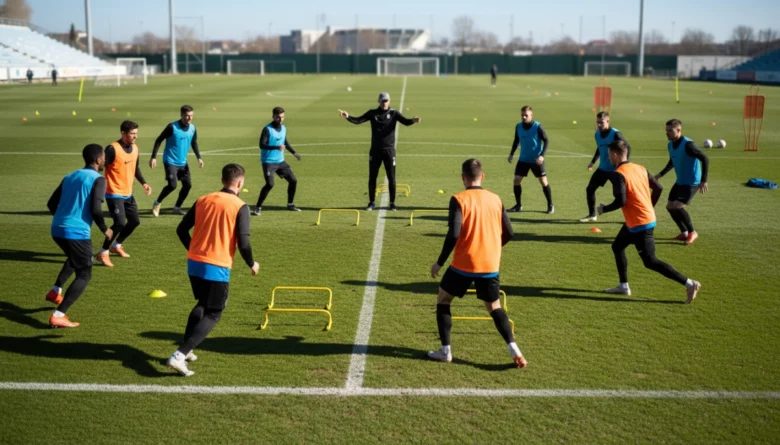
Start sessions with dynamic movement and short rondos focused on scanning. Progress from low-pressure repetitions (practicing the shape of runs) to constrained drills that force decision-making under time or possession pressure. Keep drills short (4–8 minutes) with clear coaching points and immediate feedback: highlight good timing, correct angles, and where communication could have improved the run.
Drills to build your positioning: Foundations (Drill 1–4)
These first drills are designed to ingrain habits that translate directly into match play: scanning, supporting at angles, and timing runs. Use them early in the session when players are fresh.
-
Drill 1 — Shadow runs (5–8 minutes)
Setup: Mark a 20x20m box. One player with the ball moves randomly; the partner mirrors off-the-ball runs without touching the ball. Focus: anticipation, body shape, and mirror timing. Coaching points: stay light on your feet, scan every 2–3 seconds, and exaggerate changes of pace.
-
Drill 2 — Two-touch support grid (6–8 minutes)
Setup: 15x15m grid with a neutral supporting player. Objective: receive on two touches then pass to the neutral. Focus: quality of first touch, presenting angles, quick decision-making. Coaching points: open body to the field, communicate, and offer depth or width based on pressure.
-
Drill 3 — Third-man run rondo (6–10 minutes)
Setup: 6v3 or 5v2 rondo with emphasis on the third-man run after a pass. Focus: timing the run to receive behind the defender created by the pass. Coaching points: delay or accelerate runs to exploit space and reward the passer’s vision.
-
Drill 4 — Blindside check-and-receive (6–8 minutes)
Setup: Pair up with a passer and a defender. You practice checking away then explosively receiving behind the defender’s blindside. Focus: deception, checking angle, and explosive first step. Coaching points: sell the check, then accelerate into the open half-space.
These foundational drills set the technical and cognitive baseline for more complex, game-like patterns—next, you’ll progress into transitional and attacking exercises that simulate match scenarios and cover drills 5–10.
Transition and overload drills (Drill 5–7)
-
Drill 5 — 4v4+3 transition boxes (8–10 minutes)
Setup: Two 20x20m adjoining boxes with a neutral corridor between. Play 4v4 in each box with three neutrals rotating through the corridor. On a turnover, the team that lost possession must quickly cover the corridor and block the nearest outlet to force the ball back into their box. Focus: immediate support, occupying passing lanes, and exploiting overloads when winning the ball.
Coaching points: sprint to support after a turnover, recognize when to occupy wide outlets versus central pockets, and reward quick, angled support runs that create 2v1s.
-
Drill 6 — Quick-break counters (6–8 minutes)
Setup: Half-pitch with two goals. Start with a 6v6 neutral possession phase in midfield. On coach’s whistle or targeted turnover, attackers transition to a 3v2 counter toward goal using the nearest three players. Rotate roles frequently. Focus: timing runs into space during counters, choosing depth vs. width, and composure finishing after rapid transitions.
Coaching points: first attacker must run to the channels to stretch defenders, second runner times the late diagonal into the half-space, and the third provides a safe outlet to recycle if the direct option is closed.
-
Drill 7 — Overload switch game (6–9 minutes)
Setup: 30x20m with a small target gate at each end. Play 7v5 (attackers/defenders) in the main area; defenders become attackers when they win the ball and must immediately break to the opposite gate within a time limit. Focus: recognizing overloads, checking to create passing triangles, and switching play to exploit numbers.
Coaching points: attackers should constantly offer two support angles, defenders must deny easy switches by blocking lanes, and winners should accelerate the ball quickly with a decisive outlet run.
Attacking runs and finishing patterns (Drill 8–10)
-
Drill 8 — Overlap and underlap circuits (6–8 minutes)
Setup: Full-width third of the pitch with cones marking channels. Work in trios: wide player, fullback, central midfielder. Practice overlapping and underlapping sequences culminating in a cut-back or low cross. Rotate positions after each repetition. Focus: timing of supporting runs relative to ball carrier’s movement and creating crossing angles.
Coaching points: fullback times overlap to arrive as the winger drives inside; underlap should exploit the half-space; prioritize quality of the final pass for early finishing opportunities.
-
Drill 9 — Penetrating run vs. zonal line (7–10 minutes)
Setup: 8v6 with the six defending in a staggered zonal line. Attackers work layered runs to penetrate zones—diagonals, late runs from deep, and split runs. Reward successful penetration with a shot on goal. Focus: reading zonal positions, timing late third-man runs, and finishing from cutbacks or direct through balls.
Coaching points: encourage communication to signal runs, emphasize curve and angle of the run to avoid markers, and train both on-target shooting and quick second-ball reactions.
-
Drill 10 — 3-step finishing sequence (6–8 minutes)
Setup: Small-sided attacking zone with a goalkeeper. Sequence: (1) play into the wide channel, (2) supporting player makes a near-post/late run, (3) delivery for finish. Keep sequences to three actions before reset. Focus: precision of timing, first touch into shooting position, and composure in the box.
Coaching points: encourage varied deliveries (low, whipped, cut-back), reward attackers who adjust run length to the passer’s weight, and stress quick recovery runs to be available for rebounds.
Weekly progression (sample)
- Session 1 — Foundations: Short dynamic warm-up, Drill 1–4 with emphasis on scanning and support angles; end with a low-pressure rondo.
- Session 2 — Transition focus: Combine Drill 5–7 to practice turnovers and counters under fatigue; finish with conditioned small-sided game to apply decisions at speed.
- Session 3 — Attacking patterns: Drill 8–10 with repeated finishing sequences and competitive reps; include video clips for immediate feedback.
Measuring improvement
- Use simple metrics: number of successful supporting receptions, completed third‑man runs, and quality of final third entries per session.
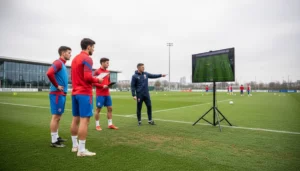
- Coach observation and brief video clips help identify timing errors and celebrate good decisions—review one play per player each week.
- Rotate roles and record performance over 4–6 weeks to spot trends in timing, decision-making, and finishing after off‑the‑ball movement.
Making off-the-ball movement habitual
Turning these drills into on-field instinct takes two things: deliberate repetition and immediate, specific feedback. Prioritize short, focused reps in training, encourage players to scan between touches, and build a culture where teammates call for support and reward smart runs. Be patient—small improvements in timing and angle compound into clearer passing lanes and more scoring chances.
For coaches seeking more structured progressions and session plans, consult broader coaching libraries such as the FA Coaching Resources to adapt these drills to your age group and squad level. Keep practicing, record progress, and make movement off the ball a non-negotiable part of your team’s identity.