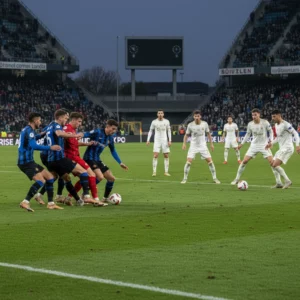

Why pressing fatigue creates predictable late-game windows you can trade
You’ll find that teams who press heavily use much more physical and cognitive energy than those that sit deep. High-intensity pressing involves repeated sprints, rapid directional changes, and intense concentration to close passing lanes. As the match approaches the final 20 minutes, these micro-exertions accumulate into pressing fatigue: slower reactions, wider gaps between lines, and looser markups. Those changes aren’t random — they follow patterns you can observe and monetize if you know what to look for.
From a bettor’s point of view, pressing fatigue tends to create two reliable effects: increased chance of conceding late goals and more transitional moments where space opens up for counterattacks. You’ll see more long passes over a tired press, higher-quality shots from distance as structure collapses, and winning teams often switching to low block protections that invite pressure. Recognizing which teams are likely to suffer or benefit from those trends lets you pick markets that reward timing rather than guesswork.
Actionable pregame and in-play betting setups you can apply
Pregame criteria to narrow your live targets
- Identify teams with high pressing metrics: look for clubs that rank top in pressures per 90 and PPDA (passes allowed per defensive action). Those will be the most likely to tire.
- Check substitution patterns: teams that regularly make early attacking subs or use limited rotation are more likely to show late-game decline.
- Assess fixture congestion: when a team has multiple games in a short span, pressing power drops noticeably — mark those matches for late-game strategies.
- Match context matters: league position, need for a result, and managerial style determine whether a side will press all game or conserve energy.
In-play signals and how to convert them into bets
Once the match is underway, you want clear, observable triggers rather than subjective feelings. Favor signals you can watch live on basic stats and visual cues: frequent unsuccessful high presses, increasing space between midfield and defense, and fewer recoveries in wide areas. When those appear in the 60–75 minute window, several betting plays become attractive.
- Late goal markets: backing “goal in last 15 minutes” or “both teams to score after 75’” works when a pressing team is visibly tiring and the opponent has pace on transitions.
- Over/under adjustments: move toward over 2.5 or over 1.5 for the second half if you see consistent turnover and higher shot volume as press intensity drops.
- Corrective in-play hedge: if you backed a pressing team early and the press collapses, consider cashing out or switching to draw-no-bet on the opponent to protect capital.
- Time-specific bets: markets like “next team to score” or “next corner” are useful for rapid exploitation of momentary gaps created by a tired press.
These setups are practical but depend on reliable signal reading and strict bankroll rules; next you’ll learn how to quantify pressing intensity, choose the best data sources, and map those signals to exact bet sizes and timing.

Quantifying pressing intensity: metrics and thresholds that matter
If you want to trade pressing fatigue consistently, you need objective thresholds — not vague impressions. Start with season and match-level metrics, then layer in live deltas (how numbers change during a game). Key metrics to monitor:
– Pressures per 90 / pressures per phase: teams in the top quartile for pressures per 90 are your primary candidates. Don’t bet on absolute numbers alone — compare an opponent’s PP90 against the league median to spot mismatches.
– PPDA (passes allowed per defensive action): a low PPDA indicates aggressive pressing. A team that normally records PPDA in the bottom 25% but shows a mid-match increase signals diminishing intensity.
– Sprint and distance trends: use available tracking (or app-reported “sprints”) to check for a drop-off. A >15–25% decline in team sprints or high-intensity distance between the first 30 minutes and the 60–80 minute window is a practical fatigue red flag.
– Turnovers and recoveries: count unsuccessful high-press attempts that lead to turnover counts for the press team. If turnovers in the final third increase by 2+ in a 15-minute span, the opposing counter is suddenly attractive.
– xG by segment and shot quality: rising opponent xG per shot or an uptick in high-value shots from transition after minute 70 is often the clearest evidence that the press has become porous.
Use relative thresholds rather than absolute: for live trading, treat a 20%+ decline in pressures or a 30% jump in opponent transitional xG as your “action” line. Those deltas are repeatable and less noisy than single-value cutoffs.
Best data sources and live tools to rely on
You don’t need pro-level subscriptions to make these reads — but higher-quality data speeds up and sharpens decisions.
– Premium providers: Opta, StatsBomb, Wyscout — best for pregame scouting and establishing baselines (pressures, PPDA, sprint totals).
– Accessible live apps: FotMob, SofaScore, LiveScore and the in-play dashboards on major bookmakers give real-time event feeds (shots, substitutions, cards) and often sprint/distance summaries for big leagues.
– Free analytics: FBref and Understat for historical pressing and xG splits by match segment; use them to build your season baselines.
– Video + broadcast cues: when tracking tools lag, rely on observable signs — players walking back into shape, missed recoveries, clears instead of building out from the back, and repeated successful long balls over the top.
Combine one premium or historical source for baseline and one live feed for in-play deltas. Practice correlating what you see on broadcast with the stats stream so your pattern recognition becomes reliable under time pressure.
Mapping signals to stake size and timing
Convert your signal strength into a simple stake ladder so emotions don’t creep in:
– Signal tier 1 (weak): single delta like a minor drop in pressures (10–15%) — micro-stake (0.5% of bankroll).
– Signal tier 2 (moderate): multiple deltas (pressures down 15–25% + opponent transitional chance created) — standard in-play stake (1–2%).
– Signal tier 3 (strong): major fatigue signs (pressures down >25%, two or more turnovers, substitution pattern shows exhaustion) — aggressive in-play stake (2–4%).
Timing window: most reliable plays appear between 70–85 minutes. If the pressing side is trailing and still pressing, expect late goals from both sides; if they’re leading and visibly tired, favor opponent “goal in last 15” or “next team to score” on the break. Always cap exposure: limit total simultaneous in-play stakes to a predetermined percent of bankroll (for example 6–8%) and use preset cash-out or stop-loss triggers when the match narrative reverses.
Putting the edge into practice
Trading pressing fatigue and late-game patterns is as much about process as it is about pattern recognition. Commit to a simple routine: pregame filtering, a short checklist of live triggers, and a fixed staking ladder you never improvise under pressure. Keep a running ledger of every in-play trade — stake, trigger, timing, outcome — and review it weekly to separate true edge from variance.
Prioritize discipline over frequency. The opportunities that match your criteria will be a fraction of all games; treating each trade as an experiment keeps losses small and lessons clear. Use cash-out and stop-loss rules to protect capital when a match narrative flips, and resist the urge to chase reversals late in the game. If you or someone you know needs help managing betting behavior, consult responsible gambling resources.
Frequently Asked Questions
What are the clearest in-play signs that a pressing team is tiring?
Look for measurable drops in pressures and sprints, increased successful long passes over the top, more turnovers in the final third, and visible broadcast cues like slower recoveries and players standing up rather than sprinting back. A combined set of these signs between 70–85 minutes is the most actionable.
Which markets are best suited to exploit late-game pressing fatigue?
Time-specific markets work best: “goal in last X minutes,” “next team to score,” late over/under (second-half totals), and correct in-play hedges like draw-no-bet on the opponent. These allow tight timing and limited exposure compared with full-match outright bets.
How should I size stakes when applying these strategies?
Use a tiered ladder tied to signal strength: micro-stakes for weak deltas (around 0.5%), standard stakes for moderate confirmations (1–2%), and larger in-play stakes only for strong, multi-factor signals (2–4%). Cap total simultaneous exposure (for example 6–8% of bankroll) and enforce preset stop-loss rules to protect long-term bankroll health.