Why off-the-ball movement is your overlooked advantage in value betting
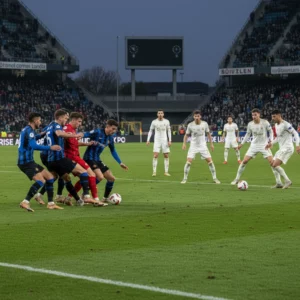
Visible events—goals, shots and passes—dominate bookmaker models, but off-the-ball movement (runs, decoys, spacing, pressing triggers) often goes underweighted. Evaluating these movements gives predictive insight into how chances will be created before they appear in mainstream metrics, letting you locate odds that don’t reflect an imminent change in match dynamics.
Think of movement as the engine that converts intent into high-quality chances. Teams and players with repeatable movement patterns generate opportunity spikes you can anticipate using video observation, event-data proxies, and, if available, tracking data.
Key off-the-ball patterns that reliably signal value opportunities
1. Runs in behind and separation creation
Track forwards and wingers who consistently create separation with timed sprints behind the defensive line. Regular runs-in-behind raise a player’s chance of high-xG opportunities; market prices based on past goal totals may lag these trends and underprice such players.
2. Third-man runs and overloads
When two players draw defenders and a third exploits the space, higher-quality shots follow. Identify teams that systematically create two-vs-two or three-vs-two overloads near the box; these structural movements are predictable by formation and personnel and indicate creators who may be underpriced.
3. Pressing triggers and transitional runs
Press patterns that force turnovers in specific zones produce repeatable counter chances. Monitor teams that win possession high and how quickly attackers vacate for transitions—these split-second runs often precede high-xG attempts.
- Look for frequency of press wins in the final third.
- Measure average time from turnover to first shot or shot-creating action.
How to quantify movement without full tracking data
Without tracking coordinates you can build proxies by combining event data and video scouting into composite signals:
- Separation proxy: count receptions with >1 second of space from nearest defender (video).
- Run frequency: successful runs-in-behind per 90 for a player across recent matches.
- Transition effectiveness: press-win location combined with a shot within 10 seconds.
Consistent quantification allows comparison with bookmaker odds across match and player markets. Below are five practical strategies to convert these signals into value bets, with simple models and checks to test before staking.
Method 1 — Anytime goalscorer: convert run-in-behind frequency into a scoring probability
Combine a player’s runs-in-behind per 90 and separation rate into a simple scoring model. Example thresholds: ≥0.8 successful runs/90 and ≥0.35 separation-rate across the last 6–8 matches indicate materially higher chances. Calibrate to historical conversion—such players might score in ~18–22% of matches versus a league average of ~9–11%.
- Build the cohort from recent matches, minimum 450 minutes to avoid small-sample noise.
- Calculate P_model from your calibration; compare to bookmaker-implied probability (1/odds). If P_model − bookmaker_prob ≥ 0.06, you likely have value.
- Staking: flat stakes or reduced Kelly fraction (e.g., 25%) because model uncertainty is still high.
- Backtest with 50–100 historical matches; filter rotation-prone players out.

Method 2 — Second-half goals and live totals: exploit transition timing after press wins
Teams that win possession high and average ≤8 seconds from turnover to shot create concentrated chances—often in the second half as opponents tire. Measure press-win frequency and turnover-to-shot timing to flag matches where second-half totals may be underpriced.
- Pre-match: target over 1.5 second-half goals when a top-quartile pressing team faces a low-block side vulnerable to transitions.
- Live: observe the first 5–20 minutes for sustained pressing; if press-win rate and turnovers exceed thresholds and first-half xG is low, consider a live over.
- Model tip: combine press-win frequency with turnover-to-shot median into a normalized transition-score to estimate P_over.
Method 3 — Player assists and third-man runs: target creator markets with overload-identification
Third-man runs and overloads create creators who may not have high raw pass volumes but regularly produce shot-creating actions. Count sequences where two players draw defenders and a third receives the final pre-shot pass.
- Identify creators with ≥0.6 third-man involvements/90 and ≥0.4 shot-creating actions from overloads.
- Market use: any-time assist and “player to assist” props—take bets when model P_assist exceeds market probability by ≥5%.
- Risk control: require a sample of ≥6 matches and exclude fixtures against ultra-compact defenses; confirm usual overload partners are starting.
Method 4 — Defensive line depth and offside-trap vulnerability
Teams with a high defensive line or poor stepping coordination are exposed to through-balls and breakaway runs. Sample goalkeeper-to-last-defender distance on non-possession sequences and track opponents’ successful runs-in-behind conceded per 90.
- Signal: opponents conceding ≥0.9 runs-in-behind/90 combined with above-median defensive line depth are likelier to concede open-play counter goals.
- Markets: match/half-winner (when pacey attackers face a high line), anytime goalscorer for fast forwards, and correct-score markets when a one-goal margin is more probable.
- Adjust for referee offside strictness and injuries that force deeper defensive setups.

Method 5 — Set-piece movement and disguised delivery patterns
Off-the-ball movement on set pieces (decoys, blocking runs, delayed flashes) creates repeatable scoring opportunities that bookmakers may underprice because set-piece goals are low-frequency. Log set-piece sequences, tag movement templates, and measure shot-creating actions.
- Signal: teams/players generating ≥0.25 shot-creating set-piece actions per 90 from the same template are candidates for set-piece props and team total edges.
- How to apply: bet player set-piece props and match totals when a team’s set-piece movement history matches opponent weaknesses (poor zonal marking, small central defenders).
- Checks: confirm set-piece taker and personnel; substitutions or tactical shifts (zonal vs. man) can invalidate the pattern quickly.
Putting movement analysis into practice
Run small, documented experiments: backtest signals, track edge and variance, and iterate the ones that show stable predictive power. Start with video scouting and event proxies; upgrade to tracking if feasible. Scale prudently using fractional Kelly or flat staking while validating live performance.
Maintain three operational rules: (1) always check lineups and tactical cues before committing; (2) control exposure—limit correlated wagers on the same match; (3) keep a log of bets and the off-the-ball signals that drove each decision so you can learn what truly adds value.
For additional reading on movement patterns and applied analytics, see StatsBomb, which complements event- and tracking-based approaches.
Frequently Asked Questions
How much match footage or data do I need before trusting an off-the-ball signal?
Minimum sensible thresholds: ~six matches or 450 minutes for player-level signals and 10–15 matches for team-level structural patterns. Shorter samples can indicate opportunities but carry higher variance—use reduced stakes and treat them as exploratory until signals stabilize.
Can these methods be used effectively for in-play (live) betting?
Yes. Strategies based on pressing intensity, turnover-to-shot timing, and visible tactical cues translate well to live markets because you can confirm patterns in real time. Allow a brief live-observation window (5–20 minutes) to validate sustained behavior before staking larger amounts.
How fast do bookmakers adapt when these off-the-ball edges are exploited?
Adaptation depends on volume and publicity. Isolated, low-frequency exploits can persist longer; broadly exploitable edges exposed publicly or used at scale invite quick correction. That’s why discretion, low-volume targeting, and continual model refinement are important.