Why off-the-ball movement is the difference-maker for forwards and wingers
You can have excellent technical ability on the ball, but in modern football the best forwards and wingers win matches before they touch the ball. Off-the-ball positioning creates the space, angles, and mismatches that let you receive in dangerous areas or pull defenders out of position for teammates. When you master where to be and when to move, you increase scoring opportunities, improve your team’s build-up, and become far harder for opponents to mark.
Think of positioning as a mix of spatial awareness, timing, and tactical understanding. You are constantly asking: Where is the next pass likely to come from? Which defender am I trying to occupy or drag away? How can I make a small, intelligent movement that creates a big advantage? The answers come from training these three core elements, reading the game, and practicing situational patterns until they become instinctive.
Core positioning principles every forward and winger should practice
Maintain the right balance of width and depth
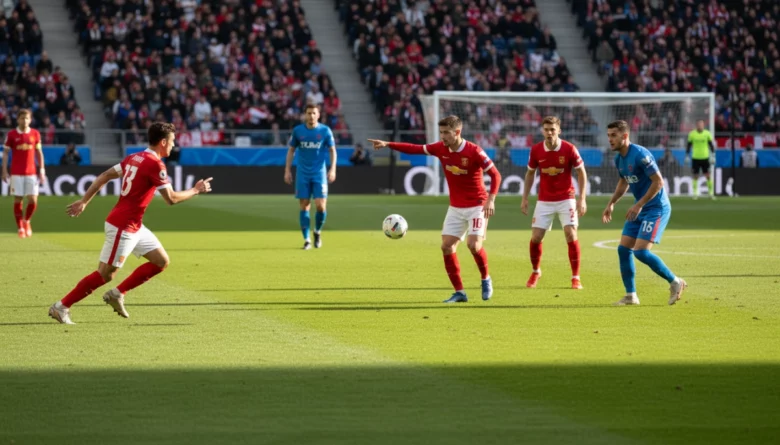
Width stretches the defense horizontally; depth pulls defenders back and creates pockets between lines. As a winger, hold width to open up channels for overlapping full-backs and diagonal passes. As a forward, vary your depth—drop to pull a centre-back out, or stay high to stretch the line. Too narrow or too static, and you make it easy for opponents to compress space; too wide or too advanced, and you lose connection with the build-up.
- Adjust width based on your team’s formation—wider in a narrow midfield, slightly narrower if the full-back overlaps often.
- Use depth to receive with your back to goal or to run in behind; alternate these in-game to unsettle markers.
Explore angles, blindside runs, and timing
The value of a run is not only where you end up but when you arrive. Make angled runs that create passing lanes and exploit the defender’s weaker foot-side. Blindside runs—moving into space behind a defender who is focused on the ball—are lethal when timed to a through pass. Timing is the engine: early runs are easy to mark, late runs often miss the pass. Practice the split-second decision of starting your run as the ball carrier prepares to play forward.
- Look for the defender’s body orientation—attack the shoulder facing away from the play to exploit blind spots.
- Coordinate with midfielders and full-backs so your timing matches their passing rhythm.
Use small positional adjustments to create big advantages
Small lateral shifts or a half-step forward can change a defending shape and open a passing window. Combine those micro-movements with brief eye contact or a call to signal your intent. You don’t always need dramatic sprints; subtle manipulations of space often result in clearer chances.
- Practice one- or two-yard shifts in training to see how teammates respond and how defenders react.
- Train pattern play—wall passes, lay-offs, and diagonal runs—so your adjustments become automatic under pressure.
These principles set the tactical foundation; next, you’ll get specific drills and game scenarios that turn this theory into repeatable, match-ready actions.
Drills to internalize off-the-ball patterns
To make intelligent positioning automatic you need drill repetition that mirrors match pressure and variety. Use short, focused exercises that emphasize the same decisions you face in games—when to hold width, when to check inside, when to time the blindside run.
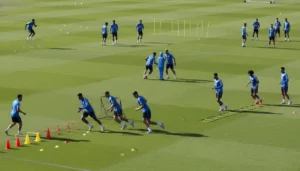
– Corridor runs drill: Set two narrow channels (10–15m apart) with a central passing lane. A winger or forward starts wide, receives a pass, then immediately checks into the central lane before a timed through ball. Rotate roles so attackers practise both the receiving and the runner triggers. Coaching focus: vary the start (early/late) and force players to read the passer’s shoulders rather than rely on a cue.
– Third-man running patterns: Three attackers and one defender. Player A passes to B, who lays off for C to make the penetrating run behind the defender. Emphasize the lay-off weight and the run’s angle. Progress by adding a supporting full-back to practice diagonal combinations.
– Receive-under-pressure finishing: Create a small grid with a full-back and a central defender; a winger receives a wide pass, must beat the full-back or play the forward with one touch and then quickly move to a scoring position for a cutback or cross. Coaching focus: quick micro-adjustments, body shape to protect the ball, and immediate shot selection.
– Shadow play with opposition shape: Run a team-only exercise simulating opponent pressing lines. Forwards and wingers move in response to imaginary defenders (coach calls or uses mannequins) to practise dropping, drifting, or holding to keep the build-up balanced. Add a passive defender and then an active defender for progressive overload.
Practice these drills in short bursts (8–12 minutes each) and vary constraints—time limits, touch restrictions, or weighted passes—to keep decision-making sharp.
Game scenarios and conditioned small-sided formats
Translating drills into match effectiveness requires scenarios that recreate match stress, transitions, and unpredictable defender behavior. Conditioned small-sided games highlight specific off-the-ball needs.
– 6v6 with two neutrals (wide outlets): Neutrals always play with the team in possession. This forces wingers to hold width to receive overloads and forwards to balance between occupying channels and supporting combinations. Score points for successful third-man passes or penetration into the final third.
– Transition counter games (4v4+2): When possession is lost, the team must win it back within five seconds or concede a point. This trains immediate repositioning and the movement required for quick counterattacks—late runs into vacated spaces become rewardable.
– Offside-line restriction: Mark an offside line and limit attackers to starting runs from behind it. This sharpens timing, forces late accelerations, and teaches forwards to read defensive lines and goalkeeper positioning.
– Isolation 1v1 with overlapping trigger: Winger vs full-back while a forward makes a blindside run. The attacker must choose to drive, cut inside to support the run, or play the forward. This builds decision-making under pressure.
After each game scenario, debrief briefly: What movement created the chance? Which cues did you use? Use video clips of these sessions to accelerate learning and reinforce correct positioning choices.
Weekly progression to make movements stick
- Week 1 — Repetition: Focus on one drill (corridor runs or third-man patterns) in every session to build muscle memory.
- Week 2 — Pressure: Add defenders and time constraints to force decision-making under stress.
- Week 3 — Transfer: Use conditioned small-sided games to test the same movements in match-like contexts.
- Ongoing — Reflect: Film a session or match, review one movement per week, and set one measurable target (e.g., successful blindside runs leading to shots).
Make positioning a habit
Technical ability opens doors; consistent, intelligent off-the-ball behaviour keeps them open. Treat positioning like a daily habit: small, focused practice sessions, regular video feedback, and clear, measurable objectives will turn thoughtful movement into instinct. Communicate with teammates about triggers and timing so your individual improvements multiply across the team. Be patient — gains are often incremental but compound rapidly once patterns are internalized.
For additional drills and coaching ideas to complement your practice plan, explore curated resources such as UEFA Training Ground to broaden your drill library and coaching knowledge.