[Start HTML content here]
Why leadership is a game-changer in your academy
Players with leadership capacity influence more than match outcomes: they shape culture, maintain standards and accelerate the development of teammates. As a coach or academy manager, you’re not only preparing athletes to perform technically and physically—you’re preparing people to think, communicate and lead under pressure. Investing time in leadership development reduces disciplinary issues, improves on-field decision-making and creates a sustainable pathway for the club’s identity.
How leadership manifests differently at youth levels
At junior levels, leadership rarely looks like the confident captain you see in senior professional teams. You should expect subtler cues: calming gestures after mistakes, consistent punctuality, positive encouragement in training, and the willingness to accept and act on feedback. Recognizing these early manifestations helps you channel those tendencies into deliberate leadership behaviors as players mature.
Recognizing natural leaders among young players
When you scan a squad, certain players will stand out not because they score the most goals but because they influence others. Identifying them requires observation across multiple settings—not just matches. Use training, travel time, warm-ups and recovery sessions as opportunities to see who leads through actions rather than words.
- Behavioral indicators: Look for players who calm teammates after errors, take responsibility during group tasks, and maintain intensity when others drop off.
- Communication style: Note whether they give constructive instructions, ask clarifying questions, or volunteer to relay coach messages—indicators of emergent leadership skills.
- Response to adversity: Monitor how they react to setbacks. Leaders tend to model resilience, offering practical solutions or encouragement instead of blaming.
- Peer respect: Observe informal dynamics—who do teammates seek out for advice, and who naturally organizes warm-ups or small-group activities?
Balancing personality and teachable skills
Not every leader is extroverted; some lead quietly by example. You should distinguish between innate personality traits (confidence, empathy) and skills that can be taught (public speaking, strategic thinking). This distinction allows you to design interventions that both leverage natural strengths and close gaps through structured practice.
Foundational principles for early leadership training
Before designing sessions, agree on clear, age-appropriate outcomes: communication clarity, responsibility for roles, and decision-making under time constraints. Start small with weekly micro-tasks that reward ownership—assigning a player to lead warm-ups, manage equipment, or run a short debrief. These low-pressure responsibilities build competence and accountability.
- Create predictable routines so players can practice leadership in safe contexts.
- Model desired behaviors consistently—coaches set the tone for respectful challenge and feedback.
- Use reflective questions after activities to encourage self-awareness: “What did you try? What worked? What would you change?”
With these traits identified and foundational principles established, you can now move into specific session designs, drills and feedback techniques that translate leadership theory into everyday practice on the pitch.
Designing on-pitch sessions that teach leadership, not just football
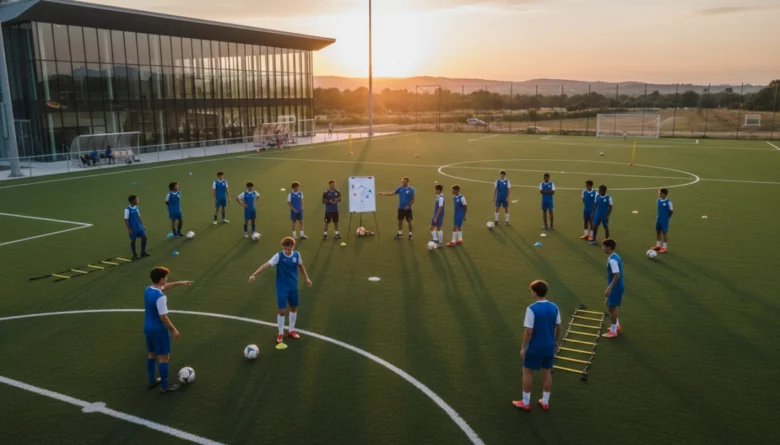
Translate principles into sessions that purposefully expose players to leadership moments. Structure matters: a clear objective, constrained problem, and a reflective review turn ordinary drills into leadership labs. Below are practical session templates you can adapt by age and ability.
- Micro-leadership warm-up (10–15 minutes)
Objective: Practice clear, concise instruction and non-verbal management.
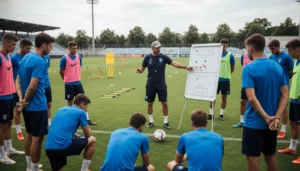
Setup: Split players into small groups. Each session a different player leads the warm-up sequence, chooses intensity, and manages transitions. Coach’s role is observer—note clarity of instruction, body language, and ability to keep the group on task. - Decision sandwich small-sided game (20–25 minutes)
Objective: Develop quick tactical communication and shared responsibility.
Setup: 4v4 or 5v5 with a “decision-maker” rule: one player wears a bib and must make the first touch or call for any team restart twice per minute. Swap decision-makers every 3–4 minutes. Add constraints (limited touches, zonal restrictions) to increase pressure and force vocal leadership. - Problem-solving scenario (15–20 minutes)
Objective: Coach conflict resolution, planning and delegation.
Setup: Present a match-like problem—e.g., down a player with ten minutes left, opponents pressing high. Give teams 3 minutes to plan roles and tactics, then play. After the scenario, conduct a 5-minute debrief led by the appointed team leader to evaluate choices and adjustments. - Peer-coaching rotations (15 minutes)
Objective: Build feedback skills and perspective-taking.
Setup: After a technical circuit, players pair up and alternate as coach and player for two rounds. Provide a simple feedback framework: Observe, Describe, Suggest. Younger players use one specific praise and one suggestion; older players expand to tactical cues and questioning techniques.
Adapt intensity and complexity by age: under-12s focus on taking turns leading and using simple language; older age groups should plan leadership in pre-match routines, tactical talks and substitutions. Keep the coach voice measured—don’t over-correct; let leaders make small mistakes and learn through immediate reflection.
Feedback, reflection and measurement: turning moments into habits
Feedback makes leadership durable. Combine coach observation, self-reflection and peer input into a concise routine so players learn to assess behavior as readily as technique.
- Structured debriefs (5–8 minutes)
Use a three-question model after drills and matches: What happened? What did the leaders try? What will we change next time? Ask the session leader to open the conversation—this privileges responsibility and models accountability. - Feedforward over fault-finding
Prioritise specific, actionable next steps. Instead of “You were quiet,” say “Next time, give two clear instructions before the restart: one positioning cue, one tactical cue.” - Peer-rating and leadership logs
Weekly, have teammates anonymously rate who showed initiative, clarity and calm under pressure (simple 1–5). Combine this with a leadership log where appointed leaders note situations they managed, what worked and one intent for the next week. Over months these data points reveal progression beyond subjective impressions. - Video and moments of replay
Short clips—30–60 seconds—are powerful. Use them to highlight body language, voice projection or tactical adjustments. Ask players to self-assess before coach input.
Finally, make leadership measurable but flexible: track opportunities taken (led warm-up, captained drill), peer recognition, and coach assessments. Use this evidence to inform role assignments, mentor pairings and longer-term development plans so leadership becomes as tangible as technical progress.
Scaling leadership across the club
Leadership development is most effective when it’s reinforced beyond the training pitch. Create linkages between age groups, staff and families so learning transfers across environments and timeframes.
- Mentor pairings: Link older youth leaders with younger players for regular check-ins and shared tasks.
- Coach alignment: Ensure all coaches use the same feedback language and leadership frameworks so messages are consistent.
- Parent engagement: Brief parents on the academy’s leadership goals and simple ways they can reinforce responsibility and resilience at home.
- Succession planning: Rotate visible roles (captain, warm-up leader, debrief facilitator) so more players experience leadership and the academy avoids over-reliance on a few individuals.
Embedding leadership into your academy’s culture
Development takes time, deliberate practice and a tolerance for imperfect attempts. Commit to creating repeated, meaningful opportunities for players to lead, and treat missteps as essential data rather than failures. Celebrate the small acts of ownership—early arrival, a constructive question, a calm instruction—because these compound into lasting habits.
Start with one change this week: assign a micro-leader role in a training session, run a two-minute peer-feedback rotation, or ask a player to lead a short post-session debrief. Track it, reflect on what you observe, and iterate. For practical templates and coach education materials to support this work, explore the FA coach development hub.