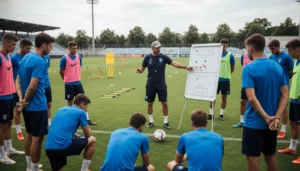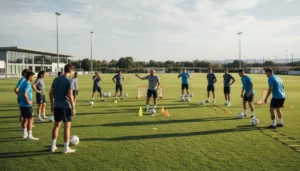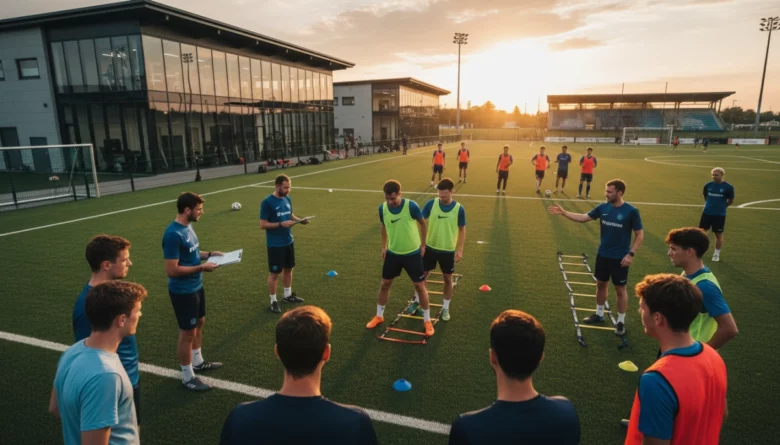
Why cultivating leaders transforms your football team
You already know that technical skills and fitness win matches, but leadership changes how your team responds under pressure. When you develop leaders at every level—captains, senior players, and emerging youth—you create a culture that sustains performance, accelerates learning, and reduces reliance on coaches to manage every situation. Leadership in football isn’t a personality trait reserved for a few; it’s a set of trainable behaviors you can teach, practice, and measure.
Leaders influence communication, decision-making, conflict resolution, and accountability. By focusing early on these elements, you enable players to make better tactical choices, support teammates emotionally, and keep standards high during setbacks. This section outlines the foundational case for leader development and the core competencies your programs should target.
Core leadership competencies to target in your training
- Communication — clear, concise on-field directives and off-field feedback help you reduce misunderstandings and speed up transitions.
- Decision-making under pressure — leaders must process information quickly and choose actions that align with tactical plans.
- Emotional intelligence — empathy, self-control, and motivation help you manage team morale and maintain focus.
- Accountability and standards — leaders set and enforce performance and behavioral norms, so you keep a consistent team culture.
- Mentorship and development — experienced players should be able to coach and elevate younger teammates, multiplying coaching resources.
Practical training elements that produce leaders
Design programs that combine experiential practice, reflection, and measurable goals. You want activities that simulate match pressure, require leadership decisions, and force players to communicate and adapt. Integrate short, repeatable modules into your regular schedule rather than relying on occasional workshops.
Sample activities to implement immediately
- Match-sim scenarios — run small-sided games with specific leadership roles (e.g., rotate a designated on-field captain who must make substitutions and tactical calls).
- Guided debriefs — after training or matches, you ask leaders to facilitate a structured review focusing on decisions, alternatives, and behavior rather than blame.
- Role-shadowing — pair emerging leaders with senior players or coaches for a week of observation and targeted feedback.
- Pressure drills — introduce time constraints and changing rules so players must adapt quickly and lead teammates through transitions.
- Leadership coaching sessions — run short modules on communication styles, conflict resolution, and emotional regulation with practical exercises.
Track progress with simple metrics: number of constructive interventions by leaders during games, quality of post-match debriefs, and peer-rated leadership impact. By embedding these elements into your training week, you create repeatable learning cycles that accelerate leadership growth.
Next, you’ll explore how to structure a multi-week leadership curriculum, select participants, and measure behavioral change so the program scales across age groups and levels of play.
Designing a scalable multi-week leadership curriculum
A successful curriculum balances progressive skill development with repeatable practice. Structure the program into 6–10 weekly modules that blend theory, on-field practice, and reflection. Each week should have a clear learning objective, a practical exercise that embeds the skill into training, and an accountability task to complete during matches or team activities.
- Week 1 — Foundations: introduce core competencies, set personal leadership goals, and run baseline assessments (peer ratings, coach observations).
- Week 2 — Communication: drills focused on concise instructions, non-verbal cues, and debrief leading; apply in small-sided games.
- Week 3 — Decision-making: situational training with rotating decision-makers and rapid-feedback loops.
- Week 4 — Emotional intelligence: sessions on self-awareness, managing frustration, and empathy exercises; role-play conflict scenarios.
- Week 5 — Accountability & standards: leaders practice setting expectations and conducting constructive peer interventions.
- Week 6 — Mentorship skills: pair leaders with younger players for micro-coaching sessions and progress reviews.
- Weeks 7–8 — Integration & assessment: match-sim tournaments where leadership roles are evaluated, followed by a 360° review and individual development plans.
Keep modules short and practical—20–30 minute classroom-style segments and 30–45 minute on-field applications fit easily into weekly schedules. Build repetition into the calendar: revisit each competency in subsequent cycles with increasing complexity or pressure. Use video clips, standardized debrief templates, and a simple leadership log where players record interventions and reflections. These artifacts let you compare behavior over time rather than relying on memory.
Selecting participants and creating tailored leadership pathways
Not every player needs the same program. Segment participants by role, age, and experience, then tailor tasks accordingly. Create three primary pathways: Emerging Leaders, Match Leaders, and Culture Stewards.
- Emerging Leaders (younger or less experienced): focus on basic communication, responsibility for small tasks, and guided shadowing. Short, frequent sessions and mentor pairing work best.
- Match Leaders (starting XI and rotational captains): emphasize tactical decision-making, on-field authority, and managing momentum. Simulations with game-like pressure are critical.
- Culture Stewards (senior squad & off-field influencers): concentrate on standards setting, peer development, and representing team values in the wider club community.
Selection should combine objective indicators (attendance, tactical understanding, coach nominations) with peer nominations. Rotate participants through roles so more players gain exposure, and avoid appointing leaders solely on technical ability—psychological readiness and willingness to serve matter more. For academy and youth setups, reduce cognitive load: simplify frameworks, use concrete checklists, and increase adult scaffolding.
Measuring behavioral change: practical metrics and feedback loops
Measurement focuses on observable behaviors rather than personality labels. Use a mix of quantitative and qualitative tools so progress is visible and actionable.
- Behavioral checklist: track specific actions (e.g., initiated constructive feedback, organized defensive line, calmed teammate after error) during matches and training.
- Peer and coach ratings: brief, regular surveys (weekly or bi-weekly) assessing influence, clarity, and supportiveness.
- Video analysis: tag moments where leaders intervene and review alternatives in guided debriefs.
- Leadership logs: self-reflections documenting decisions, outcomes, and lessons learned.
Close the loop with timely feedback: after each game, a coach or mentor meets the designated leader for a 10–15 minute debrief focused on two strengths and one target for improvement. Over time, aggregate data to identify high-potential leaders and recurring gaps across the squad. To scale, train assistant coaches and senior players to deliver reviews so leadership development becomes embedded in everyday coaching rather than a one-off program.
Embedding leadership across seasons
Turn the program into part of your calendar rather than a one-off event. Use preseason to set goals and baseline assessments, mid-season to test leaders in high-pressure fixtures, and end-of-season reviews to update development plans. Document roles, rotate responsibilities, and create handoffs so leadership knowledge isn’t tied to a single player or coach.
- Schedule short, recurring leadership modules within regular training blocks.
- Conduct mid-season 360° reviews to identify who needs more exposure or support.
- Formalize mentor pairings so institutional knowledge passes between cohorts.
- Train assistant coaches and senior players to deliver feedback and run debriefs.
Sustaining leadership growth
Leadership development is iterative: build, test, and refine. Commit to small, measurable changes each week, and treat setbacks as learning opportunities rather than failures. Over time, consistent practice and clear feedback will shift responsibility from coaches to players, creating a resilient culture that performs under pressure. For practical templates and further coach education materials, explore UEFA coaching resources.